The Library of Consciousness

The Library
of Consciousness
of Consciousness
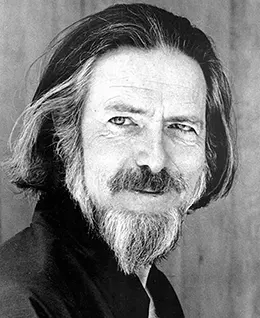
Watts argues that nuclear weapons are not only immoral but strategically stupid—destroying what one aims to control. Instead, wars should be fought with non-lethal, control-focused tactics like communication disruption or immobilization, making victory possible without mutual annihilation.
As our minds melt into mystic union with the cosmos, philosopher Alan Watts implores us to embody the trippy truth—reality is but a divine drama. Let psychedelic portals transport you through the looking glass, where self and world swirl together like paints in a kaleidoscope. But tread carefully upon this razor’s edge, where heaven and hell commingle. Are you ready to lift the veil?
Alan Watts and Laura Huxley discuss the life and work of Aldous Huxley. They touch on his transformation into a skilled lecturer, his profound intellect and wide-ranging interests, his experiences with psychedelics, his relationship with Krishnamurti, and his ability to live fully in the present moment.
Watts challenges labels, questions conventions, and discusses Zen, religion, art, politics, and culture with unflinching honesty in this interview with the freethought mazagine The Realist. From the absurdity of societal norms to the interplay of detachment and liberation, every answer reveals a refreshing, thought-provoking perspective. Whether discussing poetry, nuclear disarmament, or the meaning of freedom, this conversation feels like a deep yet playful journey into the essence of being.
In this radio program, philosopher Alan Watts leads a meditation session to help listeners experience reality beyond mental chatter. Through mindful awareness of sounds, breathing, and chanting, he guides an exploration of slowing the thinking mind and awakening to the eternal now. The program offers an accessible introduction to meditation and its potential to transcend illusory divides between self and world.
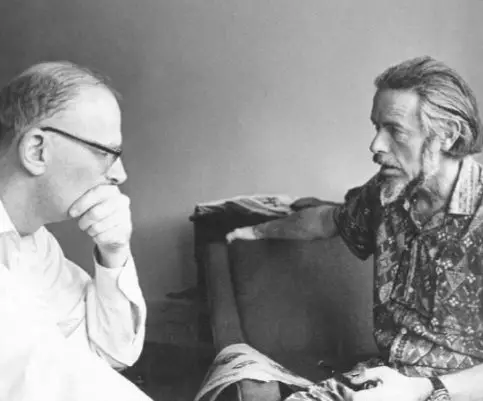
What happens when a mystic and a futurist debate humanity’s fate? Alan Watts and Arthur C. Clarke tackle our future from two unique perspectives. Clarke champions technological solutions, from synthetic food to space exploration, while Watts argues for a spiritual evolution—a change in consciousness and our relationship with nature to solve our most pressing problems.
Alan Watts explores humanity’s technological acceleration and its consequences. He contrasts the Taoist “leave nature alone” approach with our drive for progress, questioning whether either truly serves us. Watts suggests both perspectives miss the point by fixating on survival rather than present living. Our obsession with time’s passage, he argues, distracts us from fully experiencing life itself.

A classic essay on the many ways in which Western cultures have misunderstood and misapplied the essence of this profound and subtle understanding of life. Provides a core understanding of what Zen isn’t, which significantly contributes to an appreciation of the value of Zen in one’s life. A short but highly rewarding read.
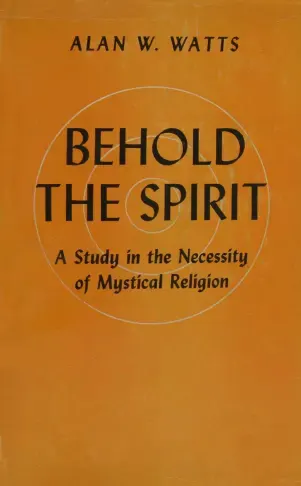
Just as groundbreaking today as it was when it first appeared in 1947, Behold the Spirit is Alan Watts’ timeless argument for the place of mystical religion in today’s world. Drawing on his experiences as a former priest, Watts skillfully explains how the intuition of Eastern religion—Zen Buddhism, in particular—can be incorporated into the doctrines of Western Christianity, allowing people of all creeds to enjoy a deeper, more meaningful relationship with the spiritual in our present troubled times.
Alan Watts touches upon a peculiar tendency wherein psychedelic drugs may ignite mystical experiences similar to those known in the Eastern philosophies. However, wheras Buddhism, Hinduism, and Zen accompany these mystical experiences with discipline in order to cultivate positive outcomes, psychedelically induced insights may lead to unhealthy misinterpretations and possibly even delusions of grandeur if not handled properly.
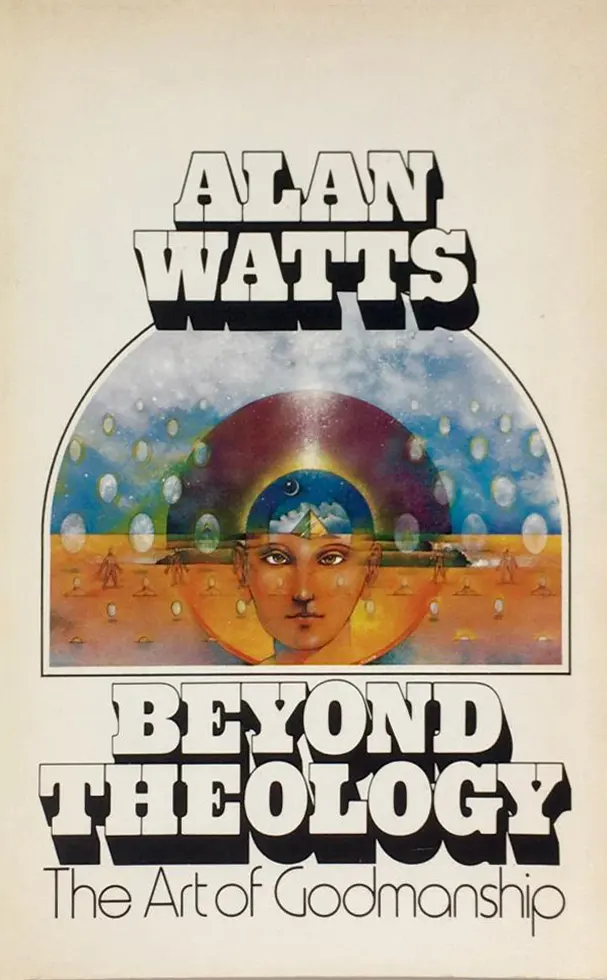
Alan Watts examines the theme that our normal sense of the person as a lonely island of consciousness is a dramatic illusion based on theological imagery. In a global context, the meaning of this imagery inevitably changes, yet without losing its unique values.
All the patterns we see around us in the world are projections of our minds. There is no way things should be, there is no way things shouldn’t be. But if humans can adopt a mental discipline in which they remain able to project patterns without becoming hung up on them, life for everyone will transform into a beautiful artwork.
Zen: the art of catching yourself in a cosmic game of tag! Watts unveils how Zen masters craftily set up double-binds, pushing seekers to chase their tails in pursuit of authenticity. It’s a merry-go-round of “be spontaneous!” and “don’t try!” until—pop!—the illusion of a separate self bursts like a soap bubble. In this whimsical dance of paradoxes, Watts reveals that the ultimate punchline of Zen is realizing there was never anyone there to get the joke in the first place!
Rather than following moral tramlines of “ought” and “should,” Watts urges an experimental approach to ethics. He laments our collective anxiety to be right at all costs—even preferring death to wrongness—while lacking any positive vision beyond avoiding doom. Life could be beautiful if we dared imagine it so.
Watts reveals a simple truth to his audience at the University of California: the mind’s incessant chatter is the root of all that ails a mortal’s soul. By silencing its din one can get to know life’s mystery.
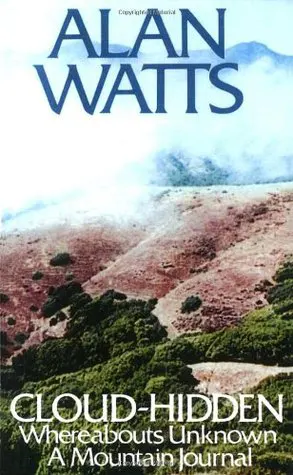
Over the course of nineteen essays, Alan Watts ruminates on the philosophy of nature, ecology, aesthetics, religion, and metaphysics. Assembled in the form of a mountain journal, written during a retreat in the foothills of Mount Tamalpais in California, Cloud-Hidden, Whereabouts Unknown is Watts’ meditation on the art of feeling out and following the watercourse way of nature, known in Chinese as the Tao. Embracing a form of contemplative meditation that allows us to stop analyzing our experiences and start living into them, the book explores themes such as the natural world, established religion, race relations, karma and reincarnation, astrology and tantric yoga, the nature of ecstasy, and much more.
Our ego-imprisonment creates needless strain. True awakening requires not heroic effort but gentle surrender—allowing mind to flow naturally. The universal consciousness awaits not through force but through letting go, like a boat drifting with the current rather than fighting against the tide.
This seminar explores consciousness as an intrinsic rhythmic interplay with reality. Watts challenges notions of separateness, asserting that individuals are not detached witnesses, but instead fundamentally unified with the cosmos. He encourages transcending ego and dualistic thinking to harmonize with the underlying patterns and dance that all differentiated experiences, including our own being, arise from. The goal is realizing our inherent interconnectedness with the seamless whole.
Alan Watts critiques sermonizing verbosity and champions contemplative rituals as paths to oneness with cosmic energy. Casting aside guilt and intellect, he beckons participants to listen, breathe, and hum into profound awareness. Meditation, he says, isn’t about effort but about letting thought dissolve into silence. Through sound, breath, and presence, he invites all to transcend ego and words, glimpsing the eternal present—a hymn to the harmony of self and cosmos.
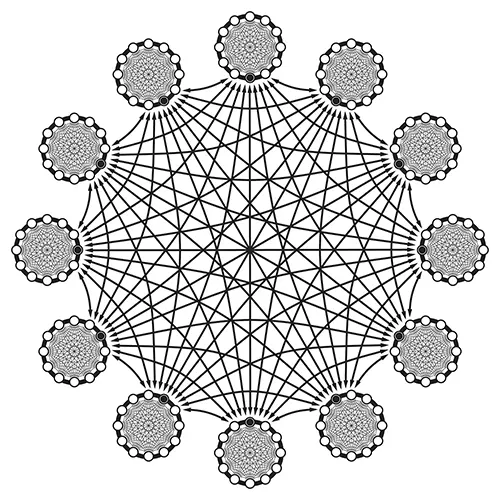
Alan takes us from the very small to the very large, explaining the interrelatedness of all things in the universe as a vast network which weaves us into a united yet unnamable divinity.
Does God really rule over humans like a monarch, or might the concept of divinity express itself as a drama through all of us?
Isn’t it funny how people who talk about spiritual matters often sound like they’re full of hot air? In this talk, Watts explores how true spirituality emerges through the ordinary and everyday, not through lofty preaching. He delves into Japanese aesthetics, particularly through the lens of seventeenth-century masters who “democratized the esoteric.” Through Haiku poetry, Zen teachings, and art, they revealed how beauty lies in suggestion rather than explanation, in imperfection rather than completion, and in embracing dissolution rather than clinging to permanence. The highest wisdom, Watts suggests, leaves no trace at all.
Watts beckons us to peer past the veil, where remembering and forgetting engage in a cosmic dance. Traverse the paradoxical streams of jiriki and tariki, self-power and other-power, until the very concept of “I” dissolves like a dewtopped lotus. Prepare to be unshackled and uninhibited, for in the quest for nothingness lies the quintessence of everythingness.
The madness of falling in love, though disruptive, can open our eyes to see the divine in our beloved. Pretending eternal passion as the sole basis for marriage builds impossible expectations. Might we not better cherish our loved ones by setting them free?
Alan explores the meaning of personal free will in the context of core tenets in Eastern mythology: how is it possible to control anything when preexisting conditions outside of our influence determine our present situation? It is a realization of the hidden unity behind our apparent diversity and a relinquishing of obsessive control that enables us to unlock a pathway leading out of the conundrum and towards a celebration and reverence of life.

Alan Watts explores modern day problems from the outlook of his own philosophy in this collection of essays, inspired mainly by Mahayana Buddhism, Hinduism, and Taoism. Tackling problems of economics, technology, cooking, and clothing, he offers a fresh perspective which is all too foreign to Western society and implores us to get back in touch with the sensuous materiality of the world.
Alan Watts speaks on the contrast between classical Chinese and historic Western attitudes in regard to man’s place in nature. Do we see ourselves as nature’s conquerors or collaborators?
Alan Watts presents an explanation of the East Indian idea of māyā: the division of the world into separate things and events is a work of human thought and not a fact of nature. Watts examines the disastrous consequences of confusing thought with fact.
This program looks at the East Indian concept of time and the illusion of living for the future as the tomorrow that never comes. Plans for the future are only useful for those able to live fully in the present.
Buddhism symbolizes its basic spiritual experience as a void, but Alan Watts explains this must not be taken literally. Watts explores the void as a symbol of freedom and of a world feeling which can be described poetically though not logically as the "absolute rightness" of every moment.
One who talks all the time can never hear what others say. And one who thinks all the time has nothing to think about except thoughts. Alan Watts examines the value of silent-mindedness or the practice of meditation in Hinduism and Buddhism.
Alan Watts explores Buddhist ideas of the value of death as the great renovator, including the Wheel of Life, and the idea of reincarnation as it is understood by philosophical Buddhists.
This program focuses on the East Indian idea that we have forgotten who or what we really are through identifying ourselves with the individual personality. The person or "persona" is also discussed as the social or dramatic mask assumed in daily life.
Alan Watts reveals his research resources for the series of Eastern Wisdom and Modern Life thus far, and he answers questions about points in the previous programs. He recommends books for further study.
Alan Watts discusses the Hindu, Buddhist and Taoist ideas about physical and moral pain, emphasizing the art of accepting pain by ridding it of its contextual associations.
Sense or meaning is a property ascribed to symbols rather than the real word. Alan Watts uses this differentiation as a prelude to the Taoist and Zen Buddhist idea of the perfectly "purposeless" life and its parallels in Christianity.
The idea of clear-cut "definiteness" reflects as a sharp and somewhat hostile attitude to life. In this talk, Alan Watts shows the value of the vague and gentle approach reflected in Far Eastern poetry and painting.
Alan Watts speaks on the contrast between organic and legalistic views of the order of nature, the former being based on visual pattern intelligence and the latter on verbal conventions.
Watts explores the contrast between organic and mechanical world views and the difference between the growing process and the making process, and he explains why one corresponds to a democratic principle and the other to a monarchical hierarchy.
A look inside Zen monastic life and practice reveals a culture of dialog and subtle humor between master and student.
This program focuses on Zen-inspired brush painting in the Chinese and Japanese traditions, and it looks at the approach of the contemporary artist Saburō Hasegawa in his inspired return to primitivity in the arts.
An demonstration of the remarkable integration of traditional Japanese homes and gardens within the rural landscape, and the celebration of natural forms of mountains and waters in Zen gardens.
A demonstration how the Taoist influence in Aikido and Judo also influenced swordsmanship.
Watts brings his expertise to bear in this presentation of Mahayana Buddhist and traditional Christian world views (he was once an Episcopal priest), and how to bring the two together.
Enjoy an introductory explanation of Zen in this episode, including fundamental principles and the process of joining a monastery in search for answers.
What lies behind the fluttering forms we see? No clay, cries Buddhism, just a ceaseless dance devoid of stuff and substance. Grasping at ghosts within grants no relief, rather anxiety’s siege. Freedom rides life’s wave instead of taking cover. Be sage and bodhisattva mid melody, summoning the courtesan’s carefree bliss. Embrace experience utterly, no escaper you need be. For the void is full, if we still our need to fill.
Science precisely describes nature’s wiggly forms by classifying them into yes/no boxes to predict and control the environment. Yet there is ignorance in seeing life as a contest between order and chaos. These principles contain each other; their realization is awakening. Rather than a crude survival struggle, we can see nature’s forms as a joyful cosmic dance, like wise fishes delightedly circling in unity.
Imagine realizing you are not just a wave, but the entire ocean! In this talk, Alan Watts skillfully guides us through Zen concepts, explaining how techniques like kōans break down our false sense of a separate self, leading to the profound realization that we are the whole flowing universe.
When Alan Watts talked about the ‘mystical experience’ among scientific circles, he preferred to call it ‘ecological awareness’—referring to a state of mind in which a person ceases to feel separate from the environment in which he or she exists.
A discussion between Alan Watts and Lynn White about the foundations for the technological destruction of nature, and some possible solutions.
The raw beauty of nature belies a growing crisis. Watts argues the ecological predicament stems from long-held religious views of the world as separate from humankind. He urges rethinking this, and seeing ourselves as intertwined with the natural world, to find solutions.
Alan presents his argument that the United States—often referred to as the ultimate materialist society—is anything but: it lacks a sincere appreciation for the material world and inadvertently destroys it in an attempt to “live the good life,” chasing after ever greener pastures just beyond the horizon of time.
Philosopher Alan Watts reveals his fascination with Buddhism began in his teens. He urges fully experiencing the present moment by listening to sounds emerge from silence. Though concerned about social issues, he cautions against reactive anger. Watts sees humans as manifestations of an intelligent universe, not isolated egos. With humor and eloquence, he invites us to embrace the weird and follow our own path.
Basing his ideas on sensory perception and physical experience, Alan Watts makes a compelling argument that everything actually depends upon nothing for its very existence.
Alan Watts was concerned with the way we trap ourselves in words. He considered it unfortunate that we separate the “I” from reality and think of “I” in terms of how others see us or the image that we want to project. What is the answer?
As Alan Watts explains, “A person who thinks all the time has nothing to think about except thoughts and loses touch with reality.” He covers basic mediation techniques, including listening without naming and chanting mantras.
To many of us the image of God as a gray-bearded omnipotent and omnipresent supreme being has become implausible, yet the common sense notions of divine authority surrounding that image persist.
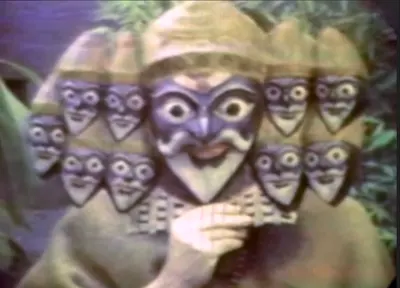
Alan Watts further explores the Hindu dramatic view of the universe, in which God plays all of the parts – all the while pretending not to know who he/she/it is!
Here Alan Watts points out that our insistence that the past determines the present is nonsensical.
Alan Watts swirls an orange on a string and shoots an arrow high into the air before explaining why the art of living is being paid to play—and to the extent that we feel compelled to work and survive, life becomes a drag.
Alan Watts comments on the circle of life and our response to the surprising event of being born in the first place.
Alan Watts speaks on our fascination with reproduction through media, and on the far out notion that human beings may just be one star’s way of becoming another star!
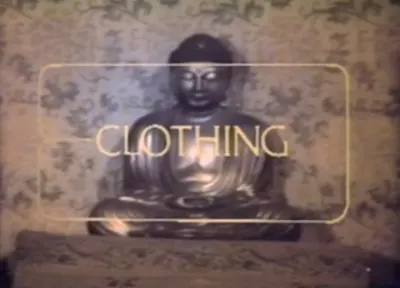
In this whimsical presentation, Alan Watts demonstrates a variety of cultural garb and points out how each influences the way we live and feel. His choices of attire include a western business suit, kimonos, and a sarong.
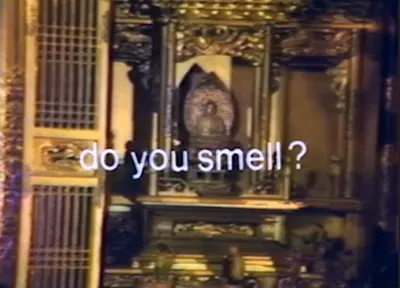
Alan Watts speaks about our most repressed sense. Here he introduces viewers to the intricacies of incense in front of a small Buddhist altar, while commenting on the types of incense used in Church rituals and all across Asia.
While walking in a field above Muir Woods, Alan Watts points to humankind’s attempts to straighten out a wiggly world as the root of our ecological crisis.
Life’s a cosmic game of peek-a-boo where the universe playfully startles itself. Embrace the depths psychedelics reveal, for they’re just the bedrock “you” under the veneer. Don’t fear the unconscious bogeys; waltz boldly into that abyss. This philosophical fun-house dares you to grapple with the great uh-oh: there’s no authority, it’s just you! But that’s enlightening, if you’re groovy enough to go with it.
In a cosmic dance of consciousness, Alan unveils the paradox of meditation: forceful pursuit versus effortless surrender. He peels away layers of symbolic thought, revealing the raw essence of direct experience. Challenging spiritual ego and commercialized enlightenment, Watts advocates for a natural flow of sensory awareness. He invites us to question our cultural lenses and embrace a fluid reality—not of static objects, but of vibrant, ever-shifting energy. In this perspective, true wisdom emerges not from grasping, but from letting go.
Awaken and find peace. Alan illuminates the path out of suffering with Buddhist philosophy as our guide. Through practicing the Noble Eightfold Path of skillful understanding, action, meditation, and concentration, we walk the Middle Way to freedom from clinging and awaken to our interconnected nature.
Can an ego overcome egocentrism? Can a self become selfless? Is there even any value in this pursuit, and if so, how should one approach it? Through renunciation and repentance, or through acceptance and merging into it? Many consciousnesses encounter this conundrum on the brisk seas of being, and Alan invites us to take a closer look at our so-called individuality.
Our seeming separation is but a trick of the light, for in truth we are all one, connected like dewdrops on a spider’s web. As technology traverses the illusory distance between us, it leads us back to the recognition of our inherent unity. Communication, once imagined as bridges between islands, dissolves as we awaken to find ourselves a sea; not separate, but an oceanic communion. We return home.
Watts suggests that the essence of communication lies not in its content, but in its style—a joyous dance akin to music. He argues that the seemingly irrelevant and meaningless aspects of life, so cherished by children, may hold the key to true wisdom. By embracing the absurdity and spontaneity of existence, we can rediscover the art of living and find delight in the grand cosmic play.
Watts argues against the traditional Western concept of politics and the idea of a powerful leader governing a nation. Instead, he proposes a more Eastern approach inspired by the Tao Te Ching, which emphasizes flexibility, spontaneity, and water-like qualities in leadership. He encourages leaders to avoid using force and to embrace the natural flow of events, allowing the governed to live their lives freely. A society modeled after this philosophy would be more harmonious and functional, as opposed to societies driven by hierarchical structures and coercion.
Alan Watts envisions a radical shift in religious thought, proposing a “religion of no religion” that transcends traditional doctrines and institutions. He argues for a departure from guilt-based teachings and future-oriented salvation towards a joyful, present-focused spirituality. Watts challenges the concept of individual ego, suggesting instead an interconnected view of humanity and divinity. He advocates for experiential rather than belief-based practices, emphasizing direct engagement with life and the recognition of innate buddha nature in all beings. This new approach blends Eastern and Western philosophies, aiming to unite people through celebratory gatherings and shared human experiences.
What if seriousness is actually the ultimate prison and divine creativity looks suspiciously like play? Imagine existence as a cosmic game—part chance, part skill—where trust is the fundamental gambling chip. We’re not separate things, but continuous processes. The universe unfolds like a sublime musical composition: nonsensical, beautiful, utterly uninterested in predetermined outcomes. Our job? Embrace the game and risk everything.
Watts discusses how cultures develop increasingly complex art forms, rituals, manners, and religions, reaching extremes of refinement. Then innovators emerge who return to simplicity, until that too becomes overly refined. The wise person avoids both awe and hostility toward complexity and simplicity, recognizing these cultural developments as elaborate games people play.
Alan talks about unexamined assumptions that underlie our commonsense beliefs which may cause confusion in our thinking about nature.
Even God might get tired of all the grave piety, Alan suggests. To prove his point, he recounts irreverent tales—like a vagabond snoozing on temple pillows who retorts, “Can’t a guy catch some zzz’s in his Dad’s house?” Laughter, Watts argues, springs from embracing life’s contradictions, not fighting them. Seen thus, humor becomes divine comedy, with the Cosmos itself as the ultimate rascal.
Watts presents two world myths—existence as artifact versus performance—and shines light on their gifts. A fascinating talk on embracing all roles in life’s epic adventure.
Lex Hixon interviews philospoher Alan Watts, who reads from his autobiography and discusses his views on life and the human condition.
This seminar covers a variety of topics, from the illusion of our separation from the environment and the futility of trying to be genuine, all the way to the discipline required to handle mystical experiences in order to bring something back from them to share with the rest of the world. The presentation ends with his endorsement of insanity, saying a healthy amount of craziness in old age is necessary to prepare for a joyous death.
Alan says ecstasy is fleeting while insight endures. Drugs or mysticism may spark rapture, but real spirituality stems from seeing through the illusion of a separate self. This liberating insight dissolves imaginary problems, merging subject and object into a unified whole. Joy may follow, but penetrating truth remains.
“A Journey to Unthinking”—introducing Eastern traditions of yoga. Alan describes the entrance into the unspeakable reality, first from the East by practices of dhyāna yoga and zazen, and then from the West through the intellectual perspectives of Ludwig Wittgenstein and Spencer Brown. East and West all arrive at the same mysterious That Which Is Unspeakable.
Alan discusses ways in which Western civilization confuses symbols with reality and introduces meditation and its associated gadgets as tools to get in touch with reality. Then he encourages his audience to cast off their reliance on symbols by guiding them through various mantra in a half-hour demonstration of this intelligent mindlessness.
Buckle up! Watts is taking us on a wild ride to assert Jesus was just a regular dude who attained cosmic consciousness as other mystics do. He condemns churches for dishing out guilt instead of providing contemplative quiet to realize our collective divinity.
Buddhism sees life as drama—the Self playing hide and seek, getting lost for fun. It strips Hinduism for export, pursuing enlightenment not through beliefs but direct experience of who you really are beyond the separate ego. Through dialectic questioning, it demolishes all concepts you cling to, shaking your foundations until you let go into a state of insecurity that amazingly equals freedom. The teacher seems perfectly sane having nothing to hold onto, inspiring you to be alright that way too.
During a seminar at the New College of Sausalito, Alan asks: what is an aesthetically satisfying composition—not just in the visual and auditory arts, but also in the arrangement of the universe?
Alan Watts left the church in 1950 because he felt the Episcopal ministry required him to defend doctrines he no longer believed expressed the deeper truth of religion. In his resignation letter, he explains that clinging to rigid theological claims felt dishonest to him, and that he needed the freedom to explore spirituality more openly beyond the boundaries of the church.
We’re living under the shadow of potential catastrophe—atomic testing, global tension, and existential dread—yet many seem hypnotized into indifferent routine. Our personal struggles mirror a cosmic dance: just as the birth and death of cells form a healthy body, our conflicts may contribute to a larger, mysterious harmony. Embracing uncertainty with a broader sense of identity, rather than succumbing to panic or despair, might just be the secret to living wisely in this unpredictable, yet oddly charming, cosmic experiment.
Watts shares his insights on the timeless wisdom of the ocean, inviting listeners to join him on a journey of discovery and enlightenment. Through his words, he reveals the magic of the sea and its ability to wash away the stresses of life, and encourages us to embrace the rhythm of the waves and the eternal nature of the universe. Listen closely and you may uncover some of the ocean’s secrets and gain access to its ancient wisdom.
For the Chinese, particularly Taoists, nature isn’t something to conquer—it’s something we’re inseparable from. While Westerners see the world as a construction needing explanation (who built it?), the Chinese view it as a spontaneous process, like a ship creating its wake. We mistakenly think the wake moves the ship, just as we think the past controls the present. But nature, including human nature, flows by itself—no builder required! Our challenge isn’t controlling it, but learning when to let go.
This talk plucks at the root of discontent in modern life. Watts reveals how society tricks children into chasing an always elusive happiness down the road, never to be found in the here and now. But ah, to truly live this moment! That is the secret. Let Alan dispel the myth of your separation from the joys inherent in our shared existence.
Avalokiteshvara: a multi-armed being embodying compassion and life’s bewildering beauty! Like the centipede who tripped by overthinking its legs, we get stuck in ego-driven control. Alan urges us to embrace the spontaneous universe, find action in letting go, and realize we’re interconnected parts of a grand, unfolding whole. True action arises effortlessly when we stop trying to control everything.
America, fresh from its dream of progress, is choking on its own symbols—mistaking money for wealth and politics for reality. Alan Watts warns: we have the tech for paradise, yet prefer war, paranoia, and poker-chips of abstraction. His cure? Drop delusion, embrace vision, and build the feast already waiting on the table.
Alan unravels the myth of self-improvement through willpower alone and exposes the fruitlessness of exerting control over one’s own mind. He points to another way: let go of straining, soften your grasp of yourself, and watch experience unfold with impartial awareness. In releasing the fantasy of domination, he says, our natural essence emerges freely. A thought-provoking exploration of the boundaries of self-mastery and the grace of acceptance.
What if our feelings were never wrong? Philosopher Alan Watts probes the liberating link between mysticism’s reverence for all things and an honest morality that accepts our emotions as natural, not shameful. By embracing our true feelings without pretense, we act with integrity, not violence.
Watts unwinds twisted views, freeing nature from Western chains. Tracking backwards in time, he reveals theories born of theology’s rigid womb and law’s worldly tomb. The veiled truth unfolds: regularities sip from the holy wellspring of our being, not external orders events obey. So too ethical waters flow from human nature’s course, not graven codes on stone. Our inner light, not outward laws, guides us rightly through terrestrial and cosmic seas.
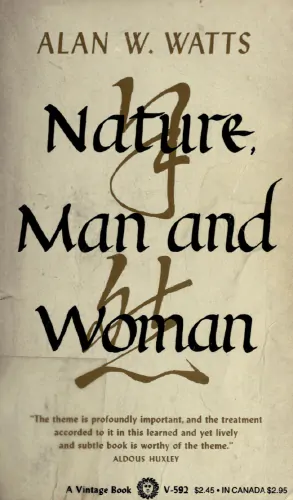
Western thought and culture have coalesced around a series of constructed ideas—that human beings stand separate from a nature that must be controlled; that the mind is somehow superior to the body; that all sexuality entails a seduction—that in some way underlie our exploitation of the earth, our distrust of emotion, and our loneliness and reluctance to love. Here, Watts fundamentally challenges these assumptions, drawing on the precepts of Taoism to present an alternative vision of man and the universe—one in which the distinctions between self and other, spirit and matter give way to a more holistic way of seeing.
Unravel the dazzling philosophy of Huayan Buddhism, where each thing mirrors all others in a cosmic web—“The Net of Jewels.” Alan invites us to see through separateness, into a reality where all is one, luminous, and dancing.
Alan reminds his audience that our mental image of the world is just an internal fairy tale loosely related to the truth of reality. Paying attention to our immediate sensory experiences can therefore help us lift this thought-tainted veil, an action which reveals the magic of being far better than any words ever could.
Watts takes us on an odyssey to peer through the prism of East and West. Brace for a metamorphosis as familiar philosophical tenets are unraveled and recast in vibrant hues. From the celestial monarchies of old to the grand cosmic theater, diverse models of existence intertwine, beckoning us to shed our self-imposed blinders. An electrifying exploration of consciousness itself, this lecture tantalizes with the promise of inner awakening and long-sought liberation.
Alan Watts explores the nature of commerce and money. He argues that we’ve lost sight of the purpose of technology—to reduce labor and increase leisure. Instead, we’re trapped in rituals and mindsets that no longer serve us. He advocates for rethinking our relationship with work, trusting employees, and embracing a more relaxed, purposeful attitude towards money and business.
Alan Watts reveals how G.K. Chesterton viewed existence as a merry metaphysical carnival, a holy hullabaloo in which we’re invited to gaily gallivant with the angels. Laughing in church? Chesterton insists – for the universe is God’s own vaudeville show, and we’re the bright-eyed children giggling in the front row. So cast aside solemnity, and come delight in the divine comedy!
Dive into the enchanting world of Alan Watts as he delves into the captivating dance between instinct and drive. Uncover the tapestry of our desires, woven intricately into our very beings rather than mere whims. Watts waltzes through the profound corridors of mortality, illuminating the beauty that arises when we embrace life’s fleeting nature. Join this intellectual soirée, where courage and liberation await your discovery.
A seminar about “what there is.” Watts weaves together keen insights from science and spirituality to propose that existence is more like a game of hide-and-seek where we pretend not to recognize how self and other are interconnected.
Alan Watts suggests the sole identity with our egoic thoughts limits our consciousness, and that existence is an interdependent web in which consciousness plays a game of pretending to be separate. We must recognize the fundamental unity of self and world; that consciousness encompasses all experience. He provides various techniques aimed at dissolving illusory boundaries of the ego. Watts maintains that enlightenment requires no striving, since we already live in eternal presence and are manifestations of the divine reality, pretending forgetfulness for the adventure of self-discovery.
Alan Watts explores the interconnectedness and interdependence of all things. He asserts that human consciousness excludes an awareness of the whole, instead focusing narrowly and seeing the world as disjointed parts. Watts aims to broaden awareness to encompass the fundamental unity underlying apparent diversity. Using examples like music intervals, Chinese philosophy, and weaving, he elucidates the inseparability of opposites like order and randomness, sound and silence, self and other. Watts contends that a recognition of the implicit wholeness of existence brings peace, joy and harmony. He encourages a view of life that pairs an individual persona with an understanding that each person is an expression of the total cosmos.
A deep dive into the cosmic game of life. Alan says existence is an interwoven, rhythmic dance veiled in illusion, but when we peek behind the veil, we find life is actually playful—so come on in and join the party!
We are called to immerse in the sacred waters of the Now, releasing resistance’s vain clutch upon illusion’s crumbling stones. Feel each quivering wave, Alan chants, and the jewel of awakening will sparkle within your depths. Suffering fades when we cease damming the holy flow, surrendering instead to bliss’s inevitable tide. Allow yourself to be cradled within sensation’s currents. Let go, dissolve, and the river’s timeless mercy will carry you home, beyond words, to dissolve in the ocean’s mystical embrace.
With cosmic wit, Watts unveils the mystic truth: our selves are but specks of dust, our lives a flicker in eternity’s eye. Yet in this vanishing wisp of consciousness, we may glimpse our true nature—the boundless void that births the ten thousand things. Facing the abyss with laughter, we find liberation in the inevitable ecstasy of dissolution.
Alan Watts lectures on the origins and essence of Zen, a branch of Mahayana Buddhism that spread from India to China and Japan. He discusses key concepts like satori, no-mind, and non-attachment, and emphasizes Zen’s spontaneity, directness, and humor. Major figures covered include Bodhidharma, Hui-neng, Rinzai, and Dogen. Watts aims to illuminate Zen’s appeal in the West and convey the feeling of its practices.
This lecture on Zen Buddhism describes the Japanese Zen monastery, meditation practices, kōans used by masters to guide students, and the enlightenment experience. Watts explains how masters help students break attachment to ego through impossible tasks. He contrasts Bankei’s simple "unborn mind" Zen with Hakuin’s intense kōan training.
Alan parts the veil on Hinduism’s mystical heart. The cosmos is līlā, a divine dance between Brahman, the eternal Self, and māyā, the veiling illusion of multiplicity. We are That: Atman, non-separate from Brahman. Liberation dawns when we wake from māyā’s spell of separateness to realize our timeless unity with the One beyond all opposites.
The journey of self-realization follows the winding path inward, to the place where you already are. As the egoic illusion falls away, the universe unveils your true face. Trust in the guru’s skillful means, which trick the mind into its own liberation. Embrace each stage of life with sincerity, not forcing but allowing insight to dawn in its own time. Know yourself to be That, the eternal Self of all that is.
With Buddha as our guide, Watts leads us along the unfolding petals of the Eightfold Path—past the thorns of suffering, through the mists of illusion, and into the open arms of change. Life, impermanent as the wind, is ours not to grasp but to embrace. Accept each fading blossom without clinging, observe each passing cloud without craving, and suffering falls away like autumn leaves. We are left not with answers, but with questions that bloom into understanding.
Alan Watts talks about the Buddhist perspective on change and impermanence. He discusses how Buddhism encourages detachment from the world of change and pursuit of nirvana, the state beyond change. However, clinging to nirvana as something permanent is still seeking permanence. True liberation comes from fully accepting change and transience, including death. The void or emptiness doctrine in Mahayana Buddhism elaborates on this by teaching that reality escapes concepts. Freedom comes from letting go of fixed ideas and accepting the void.
What a tickling trickster the universe is! As Watts wanders down philosophical byways, tales emerge of those healed by harmonizing body and world. Yet we teach children to twist themselves to fit odd ideals. Tension tunnels through society, our “civilizing” ways quite uncouth! Might we reconsider, relax our willful ways? Observantly ambling amidst being’s little blooms, we rediscover unity in the unruly diversity—finding wisdom whispering within, inviting us to dance delightfully with life’s flowing forms.
The physical world isn’t stiff and solid—it’s wiggly, playful, ever-changing. Our error lies in boxing it up with labels and straight lines. Reality, like music or mist, slips through grasping hands and laughs when we try to hold it still.
In this cosmic game of peek-a-boo, Watts unveils the proscenium arch of our minds—that thin veil between play and seriousness. The wise discover the joke: our frantic search for sincerity peels away mask after mask until—surprise!—we find nothing! And in that delicious emptiness, the ultimate paradox unfolds: when we realize we’re all play, we become utterly genuine. The angels fly, you see, because they take themselves lightly.
Life’s a game where we forget we’re the cosmic nerve-endings of an eternal now. So stop furrowing your brow—there’s divine frivolity in the endless, meaningless music of being. Drop your masks and dance lightly as angels, for you are the Joker in the pack. It’s all a joke, and the joke’s on you!
Weaving connections between Eastern thought and modern science, Alan Watts explores the wonder of space. For him, space is no mere emptiness but a cosmic tapestry integral to existence. He draws parallels between space and the Buddhist void, seeing both as the interwoven ground of being that allows consciousness to emerge.
Watts illuminates meditation as a vehicle to transcend the illusion of individuality and realize one’s intrinsic unity with the cosmos. He unveils a symphony of sacred techniques—from breath awareness to primordial sonic mysticism—as potential pathways to the ineffable experience of non-dual consciousness. By surrendering the ego’s compulsive control, one may ultimately arrive at the paradoxical fruition of subject and object coalescing into one unconditioned field of pure witnessing awareness.
Life and death, pleasure and pain, light and dark—Alan Watts playfully ponders how supposed opposites are really inseparable. He invites us to stop stressing about oblivion, for the “nothingness” of death births new life, just as night births stars. He urges us to let go of human anxiety over existence itself. Why fret when we can simply hum and realize the dance of being? Life’s profound ballet unfolds when we embrace the yin-yang harmony of opposites.
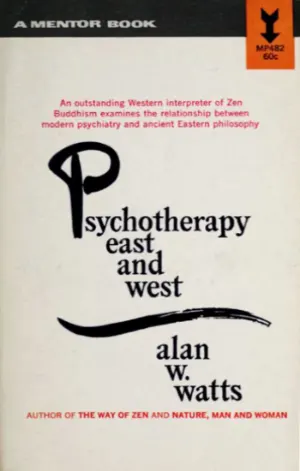
Man is burdened with an ego that is in constant conflict with society and nature, in perpetual flight from loneliness and death. Despite its diverse methods, the single aim of psychotherapy is to free man from his endless self-battle. Alan Watts’ arresting, provocative study shows how Eastern philosophers long ago faced—and solved—the problem of man’s existence in a seemingly hostile universe. Buddhism, Vedanta, Taoism, are examined and related to the theories of Freud, Jung, Sullivan, May. The inscrutable wisdom of Zen masters is made clear by Alan Watts as he explains how the modern “fiction” of the ego has clouded the sights of psychotherapy, and blocked Western man from his true place in nature.
This seminar explores the concept of consciousness and its limitations. Watts discusses the lack of depth in certain analytical approaches, highlighting the need for individuals to find harmony with life and death. He emphasizes the enrichment that comes from realizing the significance of everything and the potential healing effects of altering our state of consciousness. Watts also touches on the influence of scientific naturalism on modern psychiatry and shares a personal account of a transformative experience.
Where does pleasure come from? What are we trying to achieve in our frantic day-to-day activities? Why are we in such a hurry? And why do all of our efforts to pin the universe down and bring it under our control dial up the misery?
After discussing the nature of consciousness, the human mind, and the philosophical viewpoint that every person is God, Alan Watts assumes the role of God himself for the latter half of this lecture, answering each question his audience serves with wit and insight.
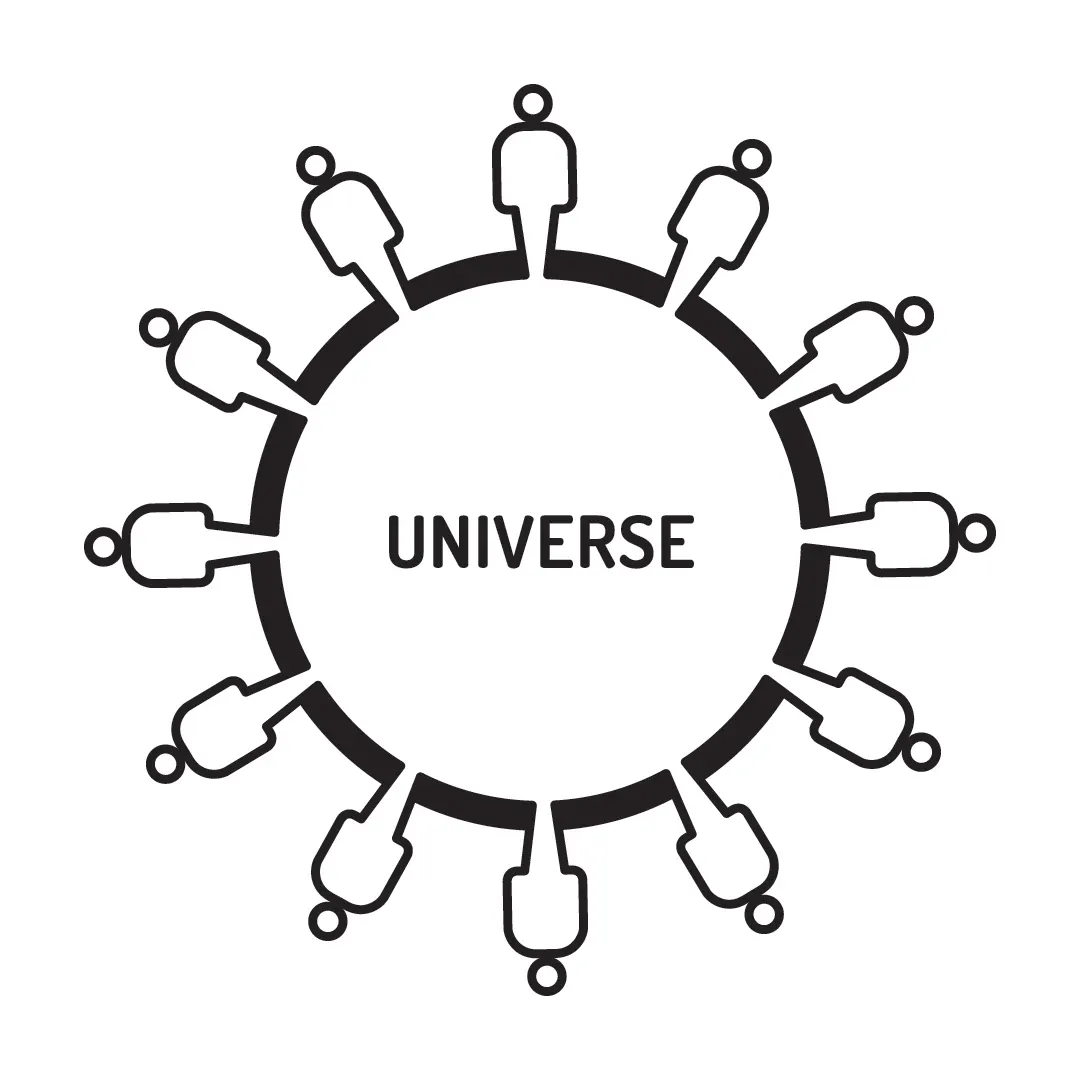
Join Alan as he expresses the meaning of life through the Hindu-Buddhist idea of reality as a divine game of hide-and-seek. "Life is not ultimately serious," Watts argues. By embracing the fluidity of identity and recognizing our interconnectedness, we can creatively engage with existence as impermanent, unified, and filled with playful potential. Accessible yet philosophically rich, these decades-old lectures offer timeless insights on the nature of reality.
Alan Watts reveals how Eastern thought embraces the wiggly dance between opposites. Buddhist masters nudge their students with banter to blend inner and outer worlds, topple rigid beliefs, and allowing freedom to rise from the rubble of shattered assumptions. In the end, clinging dissolves into flowing and suffering transforms into living.
Alan Watts discusses the limitations of Western theology, contrasting it with Eastern philosophies. He argues that the Western concept of God as a separate, authoritarian figure is problematic and that true faith involves letting go of fixed ideas about God. Watts suggests that Eastern ideas, such as the unity of opposites and the illusory nature of the ego, can provide a more meaningful understanding of spirituality and existence.
Alan Watts explores the idea of the bodhisattva doctrine in Mahayana Buddhism, which suggests that true enlightenment is found in the ordinary, secular world. He delves into the concept of jiji muge, the mutual interdependence of all things, where every person, object, and event is both insignificant and essential to the whole. Watts argues that true spirituality lies in recognizing the sacred in the mundane, without the need for overt religious symbolism or ritual.
Watts explores Joseph Campbell’s insights on spiritual evolution through different cultural phases. As societies moved from hunting to farming, religion shifted from shamanic individual experiences to structured, communal worldviews. When these social frameworks crumble—as in our modern era—we’re cast back into the forest of self-discovery. The wise seeker must abandon societal maps and wander alone into direct experience, finding what countless mystics have found: that true liberation comes not through authority, but through firsthand encounter with reality itself.
Alan coaxes the listener’s mind to simultaneously zoom in and zoom out in an effort to demonstrate that identity is merely an intellectual hallucination. Instead, personal identity is fluid, ranging from one’s constituent atoms and molecules all the way out to the farthest bounds of cosmic existence. Overcoming this mental myopia leads to greater harmony, contentment, and a desire to playfully dance with this universal energy system.
In this public radio broadcast, Alan explores the origin of the desire for meaningfulness. In the search for satisfaction, what is it that is really sought for or yearned after? The talk turns from academic discussion into poetry. What is the meaning of significance?
Watts tackles the everlasting taboo of sex in Western religion, and suggests we thank our prudish parents for making it so interesting.
Alan explores Mahayana Buddhism and the concept of śūnyatā (“emptiness”), emphasizing it as freedom from clinging, not nihilism. He explains how language and the illusion of a separate self cause suffering and contrasts this with the fluid, interconnected reality of life. Enlightenment, he argues, is embracing life’s impermanence without attachment, unlocking creativity, joy, and presence. Far from passive, this mindset energizes individuals, offering a remedy to Western culture’s obsession with control and anxiety.
Alan Watts explores love in its many forms, from desire to divine connection. He argues against forcing or faking love, saying real charity can’t be willed. Instead, Watts suggests honestly examining one’s own selfish motivations, since even egotism stems from a distorted love. By following our inner drives, love can unfold organically. Watts sees embracing risks as better than bottling up this energy, which leads to self-destruction. Allowing love to flow freely, despite heartbreaks, enables human flourishing. For Watts, light passes through a prism, but it’s all love.
Quit striving so hard spiritually, Watts implores. You’re already the Buddha you seek! Your constant efforts to improve yourself are like trying to bite your own teeth. So relax! Meditation isn’t about suffering through boredom or bragging about pain. Instead, penetrate the moment and have fun watching yourself be. Spiritual enlightenment isn’t some far-off goal—it’s already here, now. Dig it!
Here Alan explores meditation and finding inner peace through watching your breath, chanting nonsense syllables, and generally chilling out. No goals, no force, just be. Let things flow through you. Some far-out stuff for sure, but Alan’s as sincere as they come. Give it a listen if you’re seeking something deeper.
Has our techno-scientific society created problems it can’t solve? Watts says the West excels at amplifying every folly humans are capable of, yet when it comes to answering the big questions we’re like a dog chasing its tail. Perhaps solutions lie not in narrow scholarship, but in re-examining our own premises through imaginative engagement with Asian worldviews. We need protected spaces where scholars can play with concepts freely—not for any practical purpose, but for the sheer joy of ideas, because creative insights arise unpredictably from the useless act of contemplation.
Watts explores the Taoist concept of Te, or virtue, as a kind of natural excellence arising when one lives in harmony with the Tao. He examines how this spontaneous virtue contrasts with contrived virtue, relating it to wu wei and the power that comes from flowing with rather than against the river of existence.
This talk explores the Taoist philosophy of living fully in the present moment without attachment to the past or future. According to Watts, following the Tao involves acting spontaneously and effortlessly without forcing, appreciating the interconnected nature of all things, and seeing through illusions of the ego and continuity of self across time. The goal is to experience each instant purely without getting caught up in intellectualizations.
Alan Watts critiques modern academic philosophy’s arid, technical style and champions Abraham Kaplan’s book, The New World of Philosophy, for accessibly surveying diverse philosophical perspectives across cultures. Watts praises Kaplan’s work for reviving philosophy’s vital role in exploring profound human questions through a more holistic, integrative approach beyond narrow scholasticism.
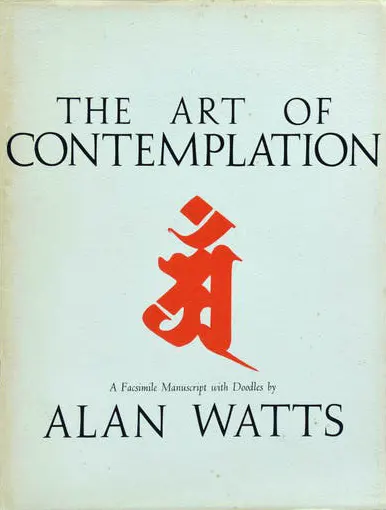
A manuscript with original doodles, handwritten by Alan Watts. It explores contemplation as awareness of the present moment without judgment. Watts advocates accepting what is happening now rather than trying to transform the mind. He sees contemplation as aligning with the flow of nature. Published as a limited edition by the Society of Comparative Philosophy.
Alan Watts explores Gandhi’s devotion to the Bhagavad Gita, unpacking its battlefield setting, Hindu ideas of the self as Ātman–Brahman, the illusory nature of fear and motive, and Krishna’s call to act from one’s true vocation: freely, without attachment to outcomes.
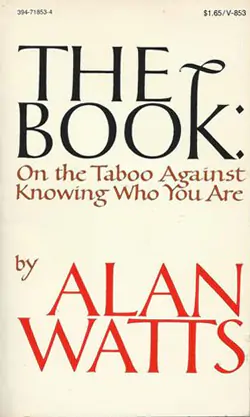
At the root of human conflict is our fundamental misunderstanding of who we are. The illusion that we are isolated beings, unconnected to the rest of the universe, has led us to view the “outside” world with hostility, and has fueled our misuse of technology and our violent and hostile subjugation of the natural world. In The Book, philosopher Alan Watts provides us with a much-needed answer to the problem of personal identity, distilling and adapting the ancient Hindu philosophy of Vedanta to help us understand that the self is in fact the root and ground of the universe. In this mind-opening and revelatory work, Watts has crafted a primer on what it means to be human—and a manual of initiation into the central mystery of existence.
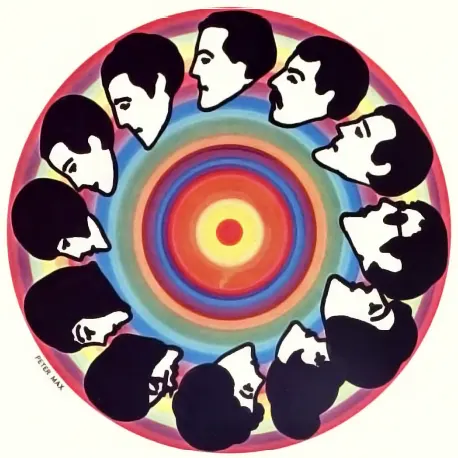
An ingenious delineation of the age-old magnetism between male and female in which a clock face is used to chart the twelve libidinal types that attract and repel.
Watts unfurls three cosmic tapestries woven by ancient minds: the Western world’s vision of nature stitched as a crafted cloth, India’s playful drama where God dances every part, and China’s Taoist masterwork of nature flowing free like mountain streams. Though the West’s thread gave rise to technological gifts, it tangled our hearts. Now the Orient’s ancient organic insight whispers fresh hope, kindling new fires of wisdom within.
Watts writes from an imagined future perspective, and envisions a society which, after a global crisis, embraces ecstasy as a vital human need. Rejecting the “uptight” culture of the past, people now cultivate ecstasy as a skilled art. They learn to surrender to life’s vibrations, transforming ordinary consciousness and finding profound joy by navigating their experiences instead of resisting them.
Watts explores Zen Buddhism’s unconventional approach to conveying enlightenment through seemingly mundane statements or actions instead of words or teachings. He delves into various Zen stories and their commentaries, revealing how direct pointing at reality can lead to a profound realization beyond the limits of language and conceptual thinking.
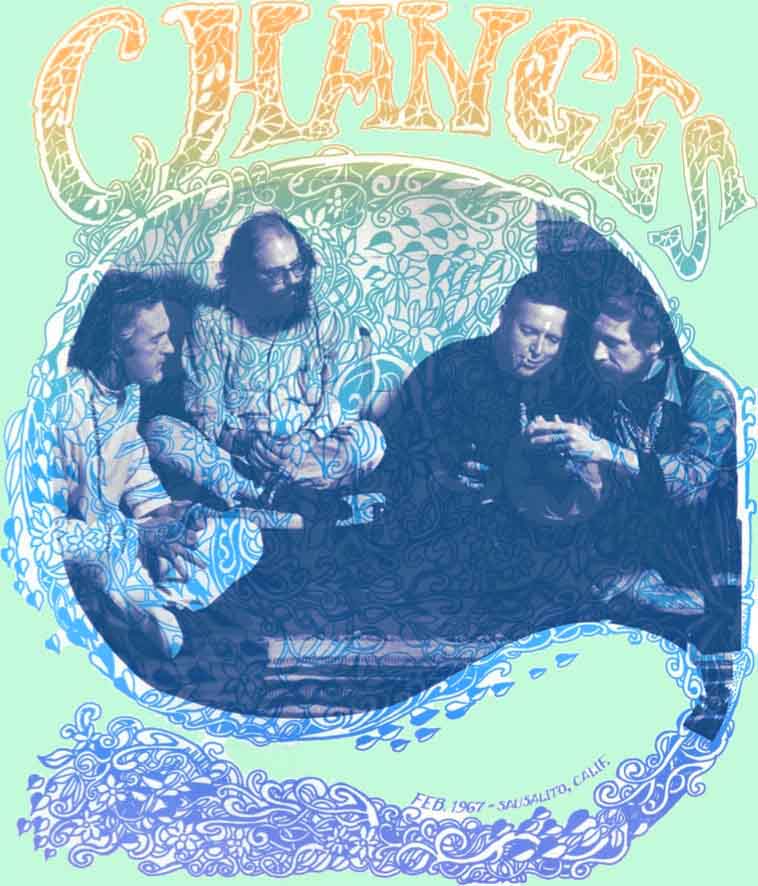
An extended conversation between Alan Watts, Timothy Leary, Allen Ginsberg, and Gary Snyder on the problem of whether to “drop out or take over.”
Originally delivered as an impromptu lecture for the Social Relations Colloquium at Harvard University, this essay explores incompatible views of human identity—are we free agents or passive products of external forces? Watts argues we should see ourselves not as isolated egos nor as puppets, but as interdependent “organism-environment fields,” inseparable from our context. This view, he suggests, could bring science and subjective experience into alignment.
One of Alan’s most popular seminars, and for good reason—in The Joker, listeners will find out why every society needs fools in order to remind itself not to take life so damn seriously.
What kind of a theory of the universe would it take for us to willingly accept the pain, turmoil, chaos, heartbreak, and suffering that comes with the state of being a consciously aware and individuated Self?
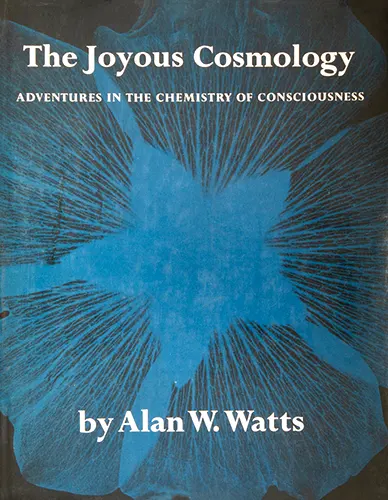
The Joyous Cosmology is Alan Watts’ exploration of the insight that the consciousness-changing drugs LSD, mescaline, and psilocybin can facilitate when accompanied with sustained philosophical reflection by a person who is in search, not of kicks, but of understanding. More than an artifact, it is both a riveting memoir of Alan’s personal experiments and a profound meditation on our perennial questions about the nature of existence and the existence of the sacred.
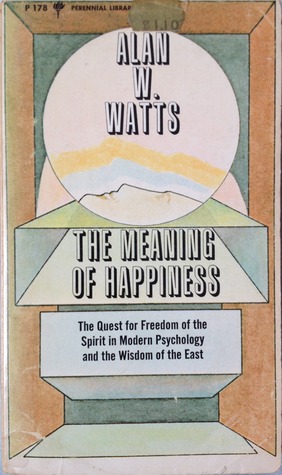
Deep down, most people think that happiness comes from having or doing something. Here, Alan Watts offers a more challenging thesis: authentic happiness comes from embracing life as a whole in all its contradictions and paradoxes, an attitude he calls the “way of acceptance.” Drawing on Eastern philosophy, Western mysticism, and analytic psychology, Watts demonstrates that happiness comes from accepting both the outer world around us and the inner world inside us—the unconscious mind, with its irrational desires, lurking beyond the awareness of the ego. Although written early in his career, The Meaning of Happiness displays the hallmarks of his mature style: the crystal-clear writing, the homespun analogies, the dry wit, and the breadth of knowledge that made Alan Watts one of the most influential philosophers of his generation.
Alan Watts argues that we spend most of our life in a sort of myopia; that is, only perceiving a microscopic subsection of the reality which we occupy. By mentally “zooming out,” humans can begin to see (and enjoy) the marvelous universal dance that has been unfolding since the Big Bang—and which now expresses itself in and through us at this very moment.
Watts critiques our scholastic obsessions and urges an experiential approach to life, blending the spiritual and concrete like a Zen gardener planting mysteries among truths. He laments our sterile materialism and bureaucratic rigidity, championing a dance with risk, creativity, and nonverbal wisdom. With tales of mystics, scientists, and madmen, he celebrates the spice of oddballs, the necessity of nonsense, and the ineffable richness of being alive.
Alan says Christianity is ultimately a solemn faith which sees the world’s essence as inherently tragic. Within its core, he illuminates three tenets: the timeless gulf between creator and creature, the ceaseless battle of good versus evil, and the everlasting division amongst individuals.
Alan says psychedelics like LSD and psilocybin can provide religious insight, but should be used with spiritual discipline to integrate the mystical experience into everyday life. He critiques psychiatry’s lack of metaphysical grounding and calls for medical and religious professionals to work together on psychedelics. Watts emphasizes psychedelics’ potential as a bridge between mystical and ordinary consciousness, while warning against spiritual inflation or romanticizing substances. Overall he presents a balanced perspective, exploring psychedelics as tools for self-knowledge that require wisdom in application.
Alan talks about the upcoming revolution in which Western society will have to come to grips with the existence of the psychedelic/mystical experience, and how to integrate it into our culture in a productive, fulfilling, and responsible manner. Included are personal recollections of DMT and LSD trips experienced by Watts himself, why the utilization of psychedelic drugs should be seen as a tool, his vision of a psychedelic campus for guided mystical experiences, and why prohibition is doomed to failure.
Watts recounts a woman’s experience of mystical insight under anesthesia and her yearning to regain it. He suggests not seeking the experience, but realizing one’s ordinary state is still part of the universal harmony glimpsed then. Like the disciple who ignored the mahout’s warning because all is Brahman, we should heed our present feelings too as part of the whole.
A personal journey to Japan reveals that the heart of Zen is not a complex philosophy, but a direct experience of reality. Alan finds that, like the sound of rain, the universe needs no translation. True understanding arises from perceiving life as it is—a unified whole where everything from blooming flowers to our own consciousness is part of a single, magnificent happening.
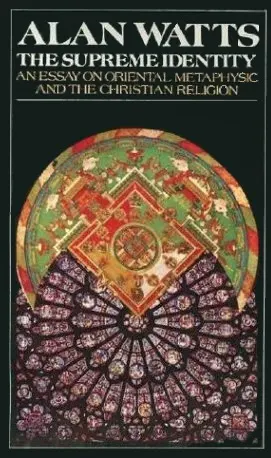
One of the most influential of Alan Watts’s early works, The Supreme Identity examines the reality of civilization’s deteriorated spiritual state and offers solutions through a rigorous theological discussion on Eastern metaphysic and the Christian religion. By examining the minute details of theological issues, Watts challenges readers to reassess the essences of religions that before seemed so familiar and to perceive Vedantic “oneness” as a meeting ground of all things—“good” and “evil.” In addressing how religious institutions fail to provide the wisdom or power necessary to cope with the modern condition, Watts confidently seeks the truth of the human existence and the divine continuum.
Though symbols empower us, they veil our oneness with the Infinite. Disconnection brings madness. Let us instead affirm our individuality while tasting universality, knowing we are the cosmos branching out to behold itself. We wave as the cosmos waves, seeding selves yet sprouted from the Source. Not apart but of the Whole, we wander home.
Highlights from the "The Love of Wisdom" radio series by Alan Watts.
Alan Watts talks on the impact of various models of the ultimate reality, and the contrasts between male and female symbolism.
Alan Watts explains the sense in nonsense and how to enjoy the playfulness of life while sincerely participating in the human game.
In a talk given to the IBM Systems Group, Alan Watts describes the wiggly world of nature and the net we cast over it.
The ferryboat philosopher riffs on how we’re not skin bags with an “I” inside, but the whole cosmos peeking out! Says we feel separate because we ignore our cosmic “floodlight” consciousness. But we’re waves in the ocean, apples on the tree. Realizing this brings real joy.
How should we view nature—as machine, drama, or organism? Alan says we must trust its organic patterns, explaining that the borders of our imagined selves determine our relationship to the environment and our role in the universe. So go with the flow, be purposeless, let the Tao wash over you like wild geese vanishing into clouds.
Alan Watts joyfully upends assumptions about reality, using wit and wisdom to reveal how existence is a dazzling, musical mystery beyond language—not a problem to be solved but an unfolding to be experienced.
Alan Watts explains how language helps to construct reality, and what to do about it. He then follows up with the challenges of expressing the ineffable.
Mankind should give up the foolish fascination with horror. Alan Watts asks us to woo, trust, and reason about good news.
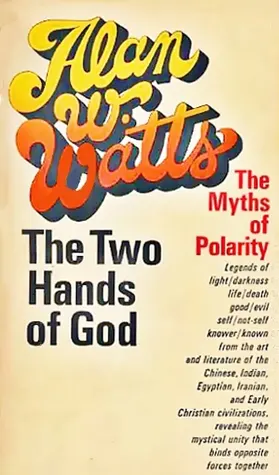
Watts takes readers on a fascinating journey through the mythology of China, Egypt, India, the Middle East, and medieval Europe. His theme is the human experience of polarity, a condition in which opposing qualities define and complement each other. Light cannot exist without darkness, good cannot exist without evil, and male cannot exist without female. Chinese philosophy expresses this idea of universal polarity with the concepts of yin and yang, while other cultures express it through the symbolic language of myth, literature, and art. Watts illustrates the way great sages and artists across time have seen beyond the apparent duality of the universe to find a deeper unity that transcends and embraces everything.
Alan Watts rails against the pervasive mindset that art must be useful, whether for propaganda or profit. Art’s supreme purpose lies not in serving any practical function, but in the sheer joyful act of creating. For Watts, true art is meaningless like nature itself—a tree simply exists to exist. We must let go of valuing only what promotes survival, he implores, so that we can rediscover the profound uselessness of play.
Watts questions society’s rigid definitions of sanity and madness, arguing we should embrace diverse states of consciousness rather than forcibly conform people. Drawing from Zen and Eastern thought, he advocates a humble, curious approach to the human condition, eschewing the search for grand, predetermined meanings. Instead, Watts encourages simply being present and attentive to the spontaneity of existence, free from the narrow constraints of societal norms and expectations. He cautions against dismissing the nonconformist as “sick,” urging an open-minded tolerance of life’s variations.
Alan describes the ways in which we have concealed truth behind a veil of thoughts. He talks about how and why we mistake symbols for reality, argues that civilization may be a misguided experiment, offers observations about the way in which abstractions have become more powerful than the realities they are referencing, and explains how we can become “unbamboozled” from these ways of thinking.
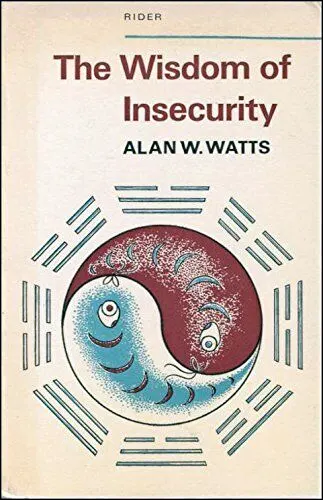
This 1951 classic explores how our modern pursuit of security through money, status, and technology leads to anxiety. Watts artfully weaves Eastern philosophy and Christian mysticism to argue that seeking permanence in an impermanent world is futile. Rather, we must embrace the present moment and recognize the illusion of the ego. Watts writes breezily with penetrating insight about how relaxing our grip on life’s impermanence paradoxically allows us to live fully. Though challenging at times, ultimately Watts’ message brings great comfort in understanding the futility of chasing security. Give it a read and you may just find the wisdom that insecurity brings!
Watts unpacks our craving for holy instruction manuals, mocking the folly of reading ancient texts like rulebooks. True authority, he argues, doesn’t descend from heaven, it rises from belief. Trusting blindly in scripture is less faith than fear of thinking for yourself.
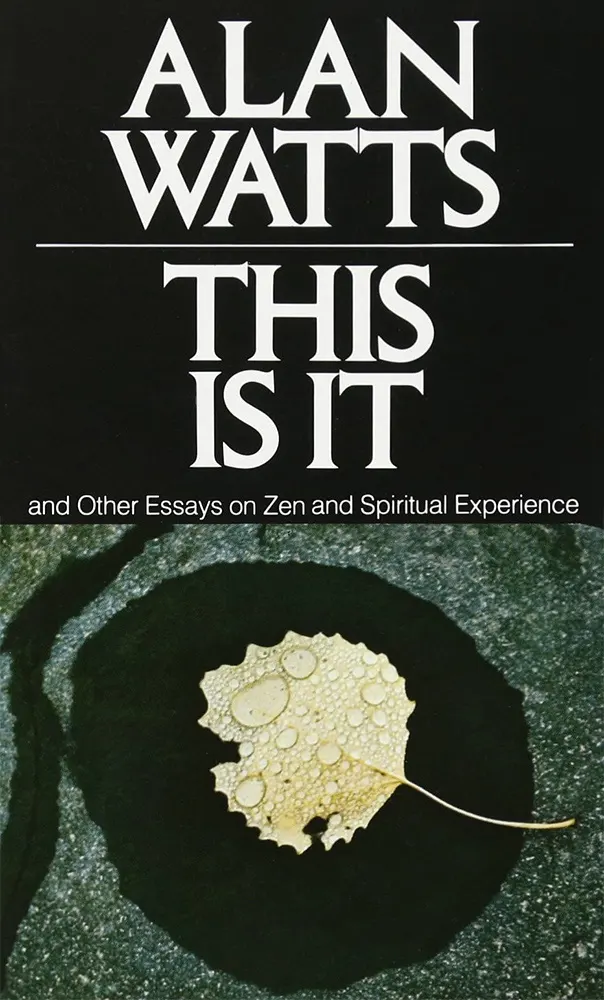
Six revolutionary essays exploring the relationship between spiritual experience and ordinary life—and the need for them to coexist within each of us. With essays on “cosmic consciousness” (including Alan Watts’ account of his own ventures into this inward realm); the paradoxes of self-consciousness; LSD and consciousness; and the false opposition of spirit and matter, This Is It and Other Essays on Zen and Spiritual Experience is a truly mind-opening collection.
Alan Watts discusses the concept of "thusness" or "suchness" in Eastern philosophy, exploring the meaning of the Sanskrit word tathātā and its potential to help us cultivate a deeper sense of presence and awareness in our daily lives.
Immerse yourself in a mind-expanding seminar, where Watts illuminates the illusion of time and history, how our fixation on the future breeds anxiety, and how to break free and find fulfillment in the elusive present moment.
An exploration of the male and female symbolism in Tantric yoga and the unity of polar opposites as a form of resonance.
Alan discusses the different states of consciousness which the human mind can attain, and some of the chemical compounds which may serve as tools to reach these mental realms.
Through the example of a city, Alan encourages his listeners to reevaluate the definition of their personal identities. Is a person a fully autonomous agent, or might they be a cell in a vast organism? Perhaps it’s necessary to understand both perspectives and recognize that each scale of magnitude depends on all others to manifest as it does.
Talking to an audience at San José State University, Alan Watts recounts the first time he tried consciousness-altering substances after meeting Aldous Huxley. He argues that Western society largely isn’t ready for the mystical experience which can be triggered in these mental states, but nonetheless advocates for them, as they may arouse positive transformation in the human collectivity.
Beginning with his prophecy that the United States of America will no longer exist in the year 2000, Alan introduces us to a possible utopia which he discerned in his vision of the future. Topics include automation, guaranteed universal incomes, the confusion of money with wealth, changing work ethics, and the grim necessity of our learning how to sensuously enjoy luxury if we want to avoid total destruction.
A delightful seminar in which Alan introduces his listeners to the details of Japanese and Chinese aesthetics.
Imagine peeling away the layers of your social self to reveal a cosmic peephole—that’s meditation, says Alan Watts, where you become the universe’s own eyeball, winking at itself. And here’s a divine chuckle: God’s not all furrowed brows and thunderbolts. Watts nudges us to float, not flail, through life’s spiritual circus. In a world gone madcap, he prescribes a dose of quiet contemplation—not as a grim duty, but as a playful plunge into life’s delicious absurdities.
Floating through this serene lecture, Alan Watts gently guides us to ponder our culture’s materialistic illusion. In calm wisdom, he unveils our preoccupation with purpose over presence and the separation from our sensual nature. Watts lovingly calls us home to the sacred play inherent in life, no longer exiled from the body’s temple. By joining life’s mystical dance arising through us, we are caressed again by joy’s timeless hands.
While Pure Land Buddhism promises easy enlightenment through faith in Buddha Amitābha, Alan Watts explains how its eccentric followers, the myōkōnin, found wisdom by goofing off. With playful tales of the monk Ryōkan’s antics, from imitating tigers to forgetting letters mid-juggle, Watts shows how these rascal sages attained childlike wonder by ditching spiritual bootstraps for carefree acceptance of their flawed humanity. For the myōkōnin, the path to Buddhahood involved more fun and games than pious efforts.
Societies—organisms or machines? Watts weighs in, finding us more cog-like than cells. But beneath individuals and collectives, he spies nature’s web—infinitely intricate, ineffably complex. This tangled tapestry, the Taoist lǐ, makes a mockery of our mechanistic ways. So while groups lack living complexity, the individual is no alpha and omega. Our world’s too messy for such simplicity.
Alan reflects on key principles of Taoism, noting how even a fruit fly views itself as the pinnacle of creation—just as humans do. He explains how opposites like yin and yang rely on each other, like two sticks held in balance. Watts cautions against relying too heavily on words to capture life’s complexity. Yet, through stories and logic, he gently encourages us to embrace non-action, trust intuition, stay humble, and recognize our connection with nature. Taoist ideas to reflect on and savor.
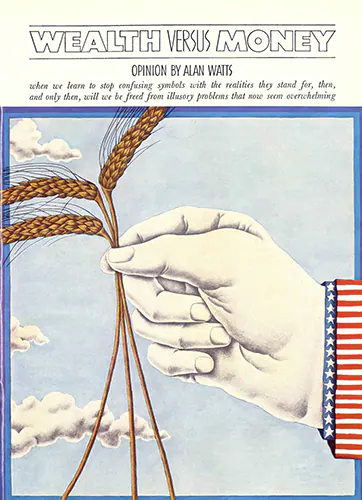
When we learn to stop confusing symbols with the realities they stand for, then, and only then, will we be freed from illusory problems that now seem overwhelming.
Alan explores the idea of separateness, and whether our language has tricked us into falsely believing that things are individual, independent, and comprehensible all on their own.
Alan guides us through an intimate meditation session that explores the nature of “now” and the self through direct experience rather than intellectual understanding. Using a variety of sounds, breathing exercises, and physical movements, we experience presence without analysis or labeling.
Alan unveils the esoteric path of Vajrayana Buddhism, a web of mantras and vivid symbols designed to plunge the seeker into the jeweled depths of inner consciousness. Through paradox and unconvention, one embraces the cosmic dance of opposites, letting go of ego efforts to realize the primordial state of spontaneous enlightenment. This way of fascination and surprise contrasts the ascetic vehicles, inviting one to become utterly absorbed in life’s mystery.
Alan Watts outlines the philosophy of Chinese thinker Zhuang Zhou, who believed in the value of useless things, relativity, and aligning with nature through “wu wei” or non-action. He used exaggeration and humor to argue against controlling life. Stories illustrate his ideas on uselessness and flowing with life’s currents. Zhuang Zhou’s approach contrasts with Western notions of God and law. Overall, his playful philosophy advocates not resisting the natural Tao or way of things.
Alan Watts guides us through Mahayana Buddhism to reveal that the world is not something we passively witness, but something we actively create—moment by moment. Wake up: reality is now, consciousness is all, and you are the dance itself.
Watts presents a core Eastern philosophy of the world as a dramatic illusion, and that it exists for no other reason except to be experienced in a playful manner.
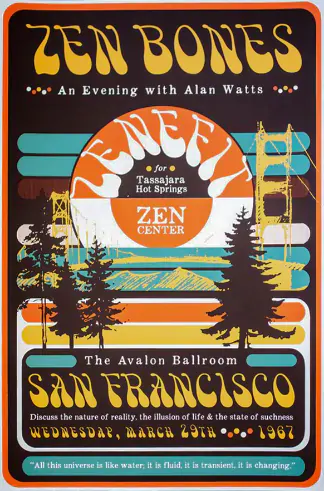
Alan invites us to float like clouds and experience life directly instead of mediating it through concepts. Constant thinking takes us from the real. Open wide the mind’s doors, be here, flow present like water. Watts touches on meditation’s liberating power in realizing our true nature already within. Sit, walk, breathe; see through illusion’s mist, marvel at the mundane’s hidden jewels, embrace each now, wake up! Enlightenment’s sunrise awaits those who cease thinking. Realize you’re already It and let life’s living magic move your feet.
This insightful booklet illuminates Zen Buddhism’s iconoclastic yet practical approach to awakening one’s mind to the timeless Reality beyond concepts. Watts skillfully conveys how Zen uses spontaneity, humor, and shock tactics to point directly to the ever-present "now." A thoughtful exploration for any seeker.
A small group of students traveled with Alan Watts through Japan, and along the way they stopped to visit the temples and gardens of Kyoto, listening to Alan bring ancient kōans to life.
Is your mind playing tricks? Alan Watts reveals Zen isn’t about adding beliefs, but shedding the illusion of a separate self. Discover you’re already part of one vast, joyful cosmic dance—experience it directly for profound freedom!
Most people grow up learning to treat life as a problem, a set of circumstances which must be controlled with an iron will. Some transcend this view, realizing there is no problem and nothing to attain. In that state of mind it becomes possible to act without intention, to have “controlled accidents,” and in so doing one may rejoin society as a whimsical rascal who breaks things to improve them.
Watts challenges the prevalent Western assumption of humans as isolated "islands" in an alien and hostile universe. He asserts our essential unity with all existence, with nature as our very bodies. He urges ending our "crusades" against our own being which create conflict. Instead he calls for realizing our intrinsic identity with the cosmic process that "peoples" the universe. Therein lies harmony and understanding our true self.
Alan Watts explores Zenrin poems: ancient verses used in Zen practice. He unveils their wisdom, revealing how everyday observations point to profound truths about our nature and the interconnectedness of all things, urging us to find the extraordinary within the ordinary.
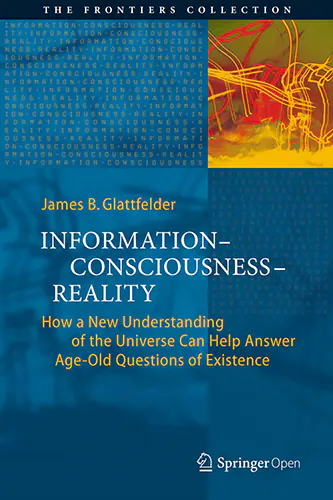
Information — Consciousness — Reality
This open access book chronicles the rise of a new scientific paradigm offering novel insights into the age-old enigmas of existence. Over 300 years ago, the human mind discovered the machine code of reality: mathematics. By utilizing abstract thought systems, humans began to decode the workings of the cosmos. From this understanding, the current scientific paradigm emerged, ultimately discovering the gift of technology. Today, however, our island of knowledge is surrounded by ever longer shores of ignorance. Science appears to have hit a dead end when confronted with the nature of reality and consciousness. In this fascinating and accessible volume, James Glattfelder explores a radical paradigm shift uncovering the ontology of reality. It is found to be information-theoretic and participatory, yielding a computational and programmable universe.
Seeing Through The Illusion
Ram Dass reveals how our senses and thoughts dupe us about the essence of reality. By liberating our consciousness from clinging to the body and mind, we can plunge into the primal energy coursing through all form. This raw perception exposes our supposed detached self as a fantasy.
TechGnosis
How does our fascination with technology intersect with the religious imagination? While the realms of the digital and the spiritual may seem worlds apart, esoteric and religious impulses have in fact always permeated (and sometimes inspired) technological communication. Erik Davis uncovers startling connections between such seemingly disparate topics as electricity and alchemy; online role-playing games and religious and occult practices; virtual reality and gnostic mythology; programming languages and Kabbalah. The final chapters address the apocalyptic dreams that haunt technology, providing vital historical context as well as new ways to think about a future defined by the mutant intermingling of mind and machine, nightmare and fantasy.
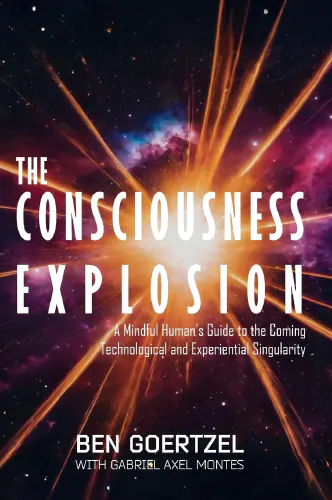
The Consciousness Explosion
The pace of engineering and science is speeding up, rapidly leading us toward a technological Singularity—a point in time when superintelligent machines achieve and improve so much so fast, traditional humans can no longer operate at the forefront. However, if all goes well, human beings may still flourish greatly in their own ways in this unprecedented era. If humanity is going to not only survive but prosper as the Singularity unfolds, we will need to understand that the Technological Singularity is an Experiential Singularity as well, and rapidly evolve not only our technology but our level of compassion, ethics and consciousness. Great for curious and open-minded readers who want to wrap their brains around these dramatic emerging changes and empower themselves with tools to adapt and thrive.
The Global Brain
Peter Russell’s award-winning video explores the idea that the Earth is an integrated, self-regulating living organism, and asks what function humanity might have for this planetary being. It suggests that we stand on the threshold of a major leap in evolution, as significant as the emergence of life itself, and the essence of this leap is inner spiritual evolution. Moreover, Russell maintains that it is only through such a shift in consciousness that we will be able to manage successfully the global crises now facing us.
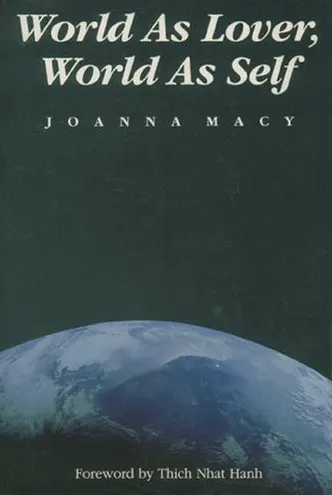
World as Lover, World as Self
This overview of Joanna Macy's innovative work combines deep ecology, general systems theory, and the Buddha's teachings on interdependent co-arising. A blueprint for social change, World as Lover, World as Self shows how we can reverse the destructive attitudes that threaten our world.