The Library of Consciousness

The Library
of Consciousness
of Consciousness
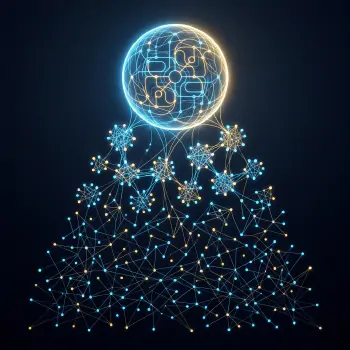
If we want the whole earth to become a superorganism, then multilevel selection theory tells us exactly what to do: make planetary welfare the target of selection.

2019
A metasystem transition is a process in which separate, self-contained systems become integrated into a new, higher-level system that coordinates and regulates them as a unified whole. The concept was introduced by cybernetician Valentin Turchin, who described it as a recurring pattern in evolution: units that once operated independently are brought under a layer of control that organizes their activity. Cells combine into multicellular organisms; organisms form societies; simple neural circuits assemble into reflective minds. Each step preserves the parts but transforms their role, embedding them within a structure that can act, adapt, and decide at a broader scale.
Unlike a mere increase in size or complexity, a metasystem transition creates a new level of agency. What was once a collection becomes, in effect, a single actor with expanded capabilities and perspective. The idea has been applied in fields ranging from biology and cognitive science to technology and social theory, where it illuminates how coordination gives rise to novelty. By tracing these jumps in organization, the concept offers a unifying lens on the growth of complexity in nature and culture—and on the possibility that humanity itself may be participating in the next great transition.

A Dialogue on Metasystem Transition
Valentin Turchin explores the theory of metasystem transitions through a conversational approach, examining how new layers of control emerge when individual systems combine into a larger, integrated system. These transitions, Turchin argues, are the key moments in evolution—like stepping stones in both biological and cultural development. By viewing evolution as a series of these transformative quanta, he reflects on past evolutionary leaps and speculates on what they could reveal about the future path of universal evolution.
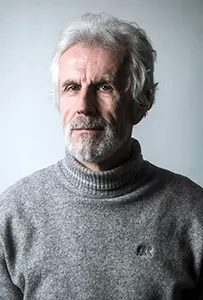
Conceptions of a Global Brain
an Historical Review
Imagine a giant, intelligent brain made of humanity and its computers—the Global Brain. This idea blends views of society as a living organism, a universal encyclopedia, and an emerging higher consciousness. Global networks like the Internet not only share information but also learn and adapt together. By combining insights from evolution and cybernetics, we can overcome conflicts and build a collective intelligence that makes solving world problems more efficient and creative.
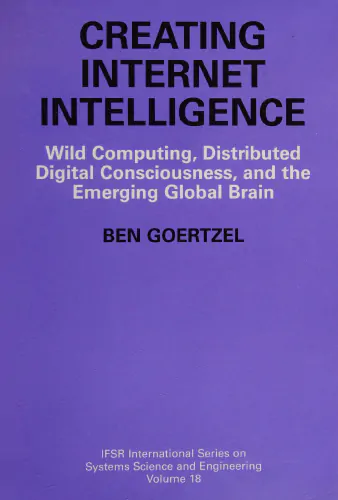
Creating Internet Intelligence
Wild Computing, Distributed Digital Consciousness, and the Emerging Global Brain
Creating Internet Intelligence explores the potential for global computer networks to evolve into autonomous intelligent systems, offering practical guidance for shaping this future. It presents a theory of intelligent systems and examines “Internet intelligence” through commercial, social, psychological, and philosophical lenses. Goertzel details pioneering software like the Webmind AI Engine and Webworld platform, designed to seed this evolution. This interdisciplinary work appeals to computer scientists, philosophers, and anyone intrigued by the intersection of technology, intelligence, and human life.
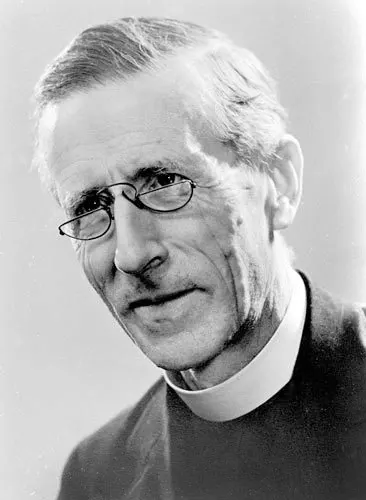
From the Pre-Human to the Ultra-Human
The Phases of a Living Planet
Teilhard de Chardin paints a grand vision of cosmic evolution, tracing life's emergence from primordial proteins to the noösphere's explosion of human thought. Rather than see humanity fading into senescence, he prophesies our passage to unimaginable trans-humanity. It's a soaring perspective on mankind's journey toward an ultimate destiny we can scarce conceive, leaving readers with an expanded sense of human possibility.
Glimpsing the Global Brain
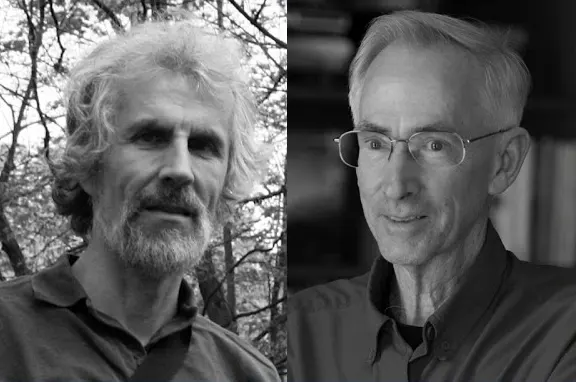
Complex systems theorist Heylighen and evolutionary biologist Wilson discuss a possible phase transition of humanity in which the members of our species become neurons in a planetary brain, utilizing the Internet as a shared exocortex.

Human Metasystem Transition (HMST) Theory
This article proposes a theory of human evolution termed Human Metasystem Transition (HMST), suggesting that major transitions in human organization have been facilitated by the emergence of new information media and energy sources. It posits that the current convergence of the Internet and renewable energy could catalyze a fourth metasystem transition, leading to a global superorganism with compressed spatial and temporal dimensions of human interaction.
Living Systems
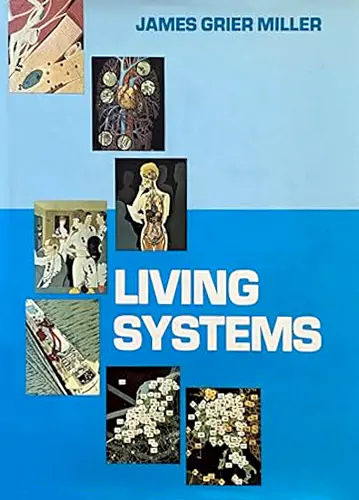
Life runs on one recipe, copied at ever-bigger scales. Cells, organs, organisms, groups, organizations, societies, and supranational systems all execute the same twenty critical subsystems: eating, deciding, remembering, reproducing, and so on. Each level “frays out” the one below into fancier, more differentiated parts, nesting cells into civilizations. Somewhere under every flag, a membrane is still deciding what counts as “us.”
Ojai Seminar 1
Part 4
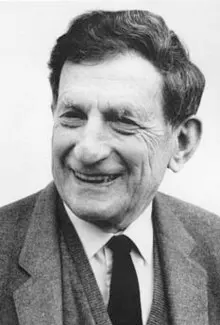
David Bohm says we are our opinions instead of just holding them. That’s why changing your mind feels like dying. Genuine dialogue means suspending assumptions rather than defending them, creating a shared space where something new can emerge. The same inability to do this is what’s driving the world mad.
Super- and/or Meta-being(s)
Could human consciousness transcend biological limits and merge with advanced technology to achieve a form of cybernetic immortality? In Heylighen’s vision, our essence suvives through evolving hybrid systems, preserving individuality while fostering unprecedented connectivity. This integration doesn’t diminish our humanity but amplifies it, allowing us to explore the cosmos and push the boundaries of existence. While not everyone may choose this path, those who do could shape the destiny of our species and the cosmos.
The Consciousness Explosion
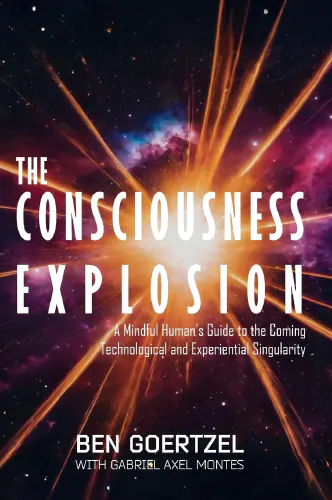
A Mindful Human's Guide to the Coming Technological and Experiential Singularity
The pace of engineering and science is speeding up, rapidly leading us toward a technological Singularity—a point in time when superintelligent machines achieve and improve so much so fast, traditional humans can no longer operate at the forefront. However, if all goes well, human beings may still flourish greatly in their own ways in this unprecedented era. If humanity is going to not only survive but prosper as the Singularity unfolds, we will need to understand that the Technological Singularity is an Experiential Singularity as well, and rapidly evolve not only our technology but our level of compassion, ethics and consciousness. Great for curious and open-minded readers who want to wrap their brains around these dramatic emerging changes and empower themselves with tools to adapt and thrive.
The Cybernetic Manifesto
Turchin and Joslyn’s manifesto imagines humanity’s next evolutionary leap: just as cells once united to form complex organisms, they foresee humans merging into “super-beings” through direct neural connections, achieving a form of technological immortality. They argue that evolution’s new frontier isn’t biological, but rather conscious and creative, driven by human will instead of natural selection. While not everyone will choose this path of integration, they suggest it’s those who do who will ultimately explore the cosmos.
The End of the Species
Teilhard de Chardin reimagines humanity’s journey, shifting from Darwinian progress to a bold vision of transformation. Confronting the shadow of extinction, he argues that humanity is unique—destined to unite and evolve into a higher state of collective consciousness. Beyond materialism, our future lies not in endless survival but in a breakthrough that transcends time and space. This spiritual awakening offers hope, turning despair into a promise of rebirth and revealing humanity’s true purpose in the cosmos.
The Formation of the Noösphere
A Biological Interpretation of Human History
The noösphere is the total mental activity which emerges out of a complex biosphere, and in this essay Teilhard describes how our planet is growing its very own mind.
The Global Superorganism
An Evolutionary-Cybernetic Model of the Emerging Network Society
The organismic view of society is updated by incorporating concepts from cybernetics, evolutionary theory, and complex adaptive systems. Global society can be seen as an autopoietic network of self-producing components, and therefore as a living system or “superorganism”.
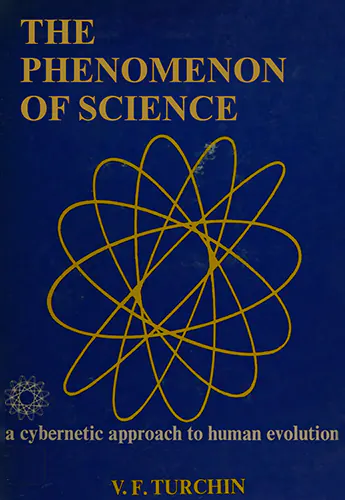
The Phenomenon of Science
A Cybernetic Approach to Human Evolution
Imagine a groundbreaking book that unveils the hidden architecture of intelligence itself. From the humble beginnings of single-cell organisms to the dizzying heights of human culture and science, Valentin Turchin charts the epic journey of cognition. He reveals how each quantum leap in mental prowess—from basic reflexes to abstract reasoning—emerges from a process called “metasystem transitions.” By weaving together cybernetics, evolutionary theory, and the hierarchical nature of mind, Turchin offers a revolutionary perspective on how consciousness evolves. Prepare to see the story of life and thought in an entirely new light.
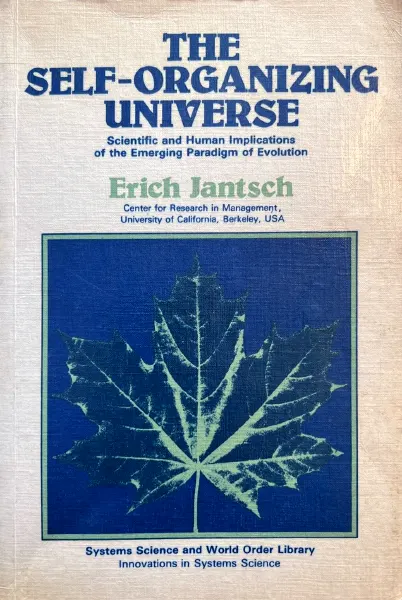
The Self-Organizing Universe
Scientific and Human Implications of the Emerging Paradigm of Evolution
The evolution of the universe—ranging from cosmic and biological to sociocultural evolution—is viewed in terms of the unifying paradigm of self-organization. The contours of this paradigm emerge from the synthesis of a number of important concepts, and provide a scientific foundation to a new world-view which emphasizes process over structure, nonequilibrium over equilibrium, evolution over permanency, and individual creativity over collective stabilization. The book, with its emphasis on the interaction of microstructures with the entire biosphere, ecosystems etc., and on how micro- and macrocosmos mutually create the conditions for their further evolution, provides a comprehensive framework for a deeper understanding of human creativity in a time of transition.
The World-Wide Web as a Super-Brain
From Metaphor to Model
If society is viewed as a superorganism, communication networks play the role of its brain. This metaphor is developed into a model for the design of a more intelligent global network. The World Wide Web, through its distributed hypermedia architecture, functions as an “associative memory”, which may “learn” by the strengthening of frequently used links. Software agents, exploring the Web through spreading activation, function as problem-solving “thoughts”. Users are integrated into this “super-brain” through direct machine interfaces and the reciprocal exchange of knowledge between individual and Web. (Published in Cybernetics and Systems ’96, p. 917–922.)
World Wide Brain
The Emergence of Global Web Intelligence and How it Will Transform the Human Race
Ben Goertzel says the Internet is evolving towards a “global Web mind”–an emergent, distributed intelligence surpassing human capabilities. This development, grounded in complexity science, could solve AI’s scalability issues and merge humanity with technology. While potentially solving global problems, it raises concerns about individual freedom. Drawing parallels with spiritual concepts like the noösphere and collective unconscious, this evolution is seen as inevitable and transformative. As we nurture this new form of life, we stand at the threshold of a profound shift in human consciousness and global interconnectedness.