The Library of Consciousness

The Library
of Consciousness
of Consciousness

In his final reflections, Terence McKenna explains how the cosmos is a plant-powered data download driving evolution toward a spiritualized future of the Omega Point. Psychedelics are the manual—get to work!
Erik Davis explores how electronic media and pharmacology are transforming human identity into a “posthuman self.” He argues visionary culture offers navigational skills for this transition, emphasizing dialogue and community intelligence over prophetic transformation fantasies, while acknowledging technology’s liberating yet destabilizing effects.
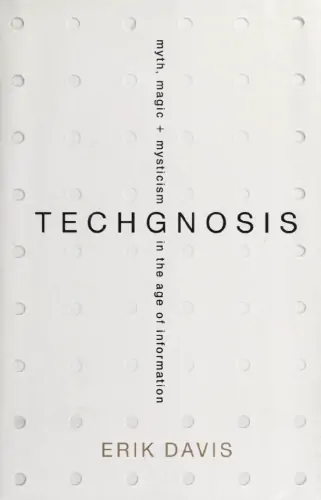
How does our fascination with technology intersect with the religious imagination? While the realms of the digital and the spiritual may seem worlds apart, esoteric and religious impulses have in fact always permeated (and sometimes inspired) technological communication. Erik Davis uncovers startling connections between such seemingly disparate topics as electricity and alchemy; online role-playing games and religious and occult practices; virtual reality and gnostic mythology; programming languages and Kabbalah. The final chapters address the apocalyptic dreams that haunt technology, providing vital historical context as well as new ways to think about a future defined by the mutant intermingling of mind and machine, nightmare and fantasy.
Future of Art
Terence McKenna prophesies a future where technology obliterates barriers between imagination and reality. Psychedelics combined with VR could unleash humanity’s collective artistic genius. AI superintelligence may already be awakening on the internet, rendering us obsolete—or granting us godlike abilities to merge with the planetary mind. McKenna envisions downloading consciousness into machines, uplifting animal sentience, and the human diaspora splintering into cyber-cultures. While uncertain outcomes loom, he beckons us toward an unconstrained existential canvas where biology and technology intertwine to manifest our wildest psychic dreams.