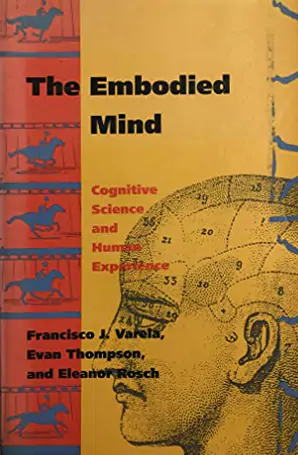
Eleanor Rosch is an American cognitive psychologist whose work reshaped how we understand categories—the mental boxes we use to organize the world. Rather than seeing categories as rigid and rule-bound, Rosch revealed that they are built around “best examples,” or prototypes: a robin is a more “birdy” bird than a penguin. This deceptively simple insight helped spark the rise of cognitive science, influencing fields from psychology and linguistics to artificial intelligence. Her research made the mind feel less like a filing cabinet and more like a living ecosystem, full of gradients, clusters, and fuzzy edges.
Rosch’s work also bridged science and philosophy, drawing on ideas from Buddhist philosophy to question how perception and language shape reality. She explored how the categories we rely on are not fixed truths but human constructions—useful, flexible, and sometimes misleading. In doing so, she invited a revolution: to see thinking itself as a creative act. If the world comes pre-sorted, Rosch suggested, it is only because we have already begun the sorting—and perhaps, with a little awareness, we can learn to see beyond the labels.