The Library of Consciousness

The Library
of Consciousness
of Consciousness


Does It Matter?
Alan Watts explores modern day problems from the outlook of his own philosophy in this collection of essays, inspired mainly by Mahayana Buddhism, Hinduism, and Taoism. Tackling problems of economics, technology, cooking, and clothing, he offers a fresh perspective which is all too foreign to Western society and implores us to get back in touch with the sensuous materiality of the world.
Natural Law
Watts unwinds twisted views, freeing nature from Western chains. Tracking backwards in time, he reveals theories born of theology’s rigid womb and law’s worldly tomb. The veiled truth unfolds: regularities sip from the holy wellspring of our being, not external orders events obey. So too ethical waters flow from human nature’s course, not graven codes on stone. Our inner light, not outward laws, guides us rightly through terrestrial and cosmic seas.
Pursuit of Pleasure
Where does pleasure come from? What are we trying to achieve in our frantic day-to-day activities? Why are we in such a hurry? And why do all of our efforts to pin the universe down and bring it under our control dial up the misery?
Solid Emptiness
Alan explores Mahayana Buddhism and the concept of śūnyatā (“emptiness”), emphasizing it as freedom from clinging, not nihilism. He explains how language and the illusion of a separate self cause suffering and contrasts this with the fluid, interconnected reality of life. Enlightenment, he argues, is embracing life’s impermanence without attachment, unlocking creativity, joy, and presence. Far from passive, this mindset energizes individuals, offering a remedy to Western culture’s obsession with control and anxiety.
Spiritual Authority
Quit striving so hard spiritually, Watts implores. You're already the Buddha you seek! Your constant efforts to improve yourself are like trying to bite your own teeth. So relax! Meditation isn't about suffering through boredom or bragging about pain. Instead, penetrate the moment and have fun watching yourself be. Spiritual enlightenment isn't some far-off goal—it's already here, now. Dig it!
Limits of Language
Alan Watts explains how language helps to construct reality, and what to do about it. He then follows up with the challenges of expressing the ineffable.
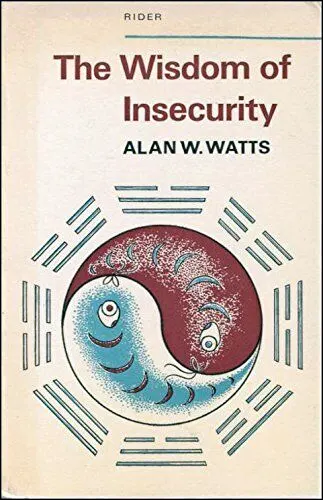
The Wisdom of Insecurity
This 1951 classic explores how our modern pursuit of security through money, status, and technology leads to anxiety. Watts artfully weaves Eastern philosophy and Christian mysticism to argue that seeking permanence in an impermanent world is futile. Rather, we must embrace the present moment and recognize the illusion of the ego. Watts writes breezily with penetrating insight about how relaxing our grip on life's impermanence paradoxically allows us to live fully. Though challenging at times, ultimately Watts' message brings great comfort in understanding the futility of chasing security. Give it a read and you may just find the wisdom that insecurity brings!