Dorion Sagan is an American science writer, essayist, and ecological philosopher. He has authored or co-authored over 25 books on culture, evolution, and the history and philosophy of science, with his works translated into 15 languages.
Sagan is the son of renowned astronomer Carl Sagan and distinguished biologist Lynn Margulis. His collaborative works often explore the intersections of science and philosophy, notably focusing on symbiosis as a driving force in evolution and the concept of the human body as a “multispecies organism.”
Among his notable publications are Into the Cool: Energy Flow, Thermodynamics, and Life (co-authored with Eric D. Schneider), which examines the relationship between non-equilibrium thermodynamics and life, and Lynn Margulis: The Life and Legacy of a Scientific Rebel, a biography of his mother. His book Death and Sex won first place at the 2010 New York Book Show in the general trade nonfiction category.
Sagan's contributions extend beyond writing; he has been a Humana Scholar at Centre College in Danville, Kentucky, and is a Fellow of the Lindisfarne Association. His interdisciplinary approach has made significant impacts in both scientific and humanities fields, challenging conventional perspectives on life and evolution.
Alphabetic
Date
Duration
Word Count
Popularity
Date
1986
Format
Book
Host
archive.org
Quotes
5
Views
3
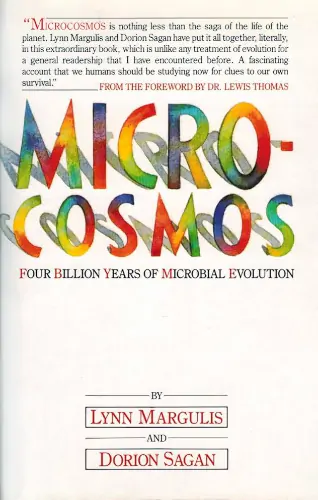
An exploration of the central role of microorganisms in the history of life on Earth, presenting evolution as a process driven by symbiosis and interdependence rather than just competition.
Date
1988
Format
Essay
Host
archive.org
Views
9
This modern take on the Narcissus myth challenges human exceptionalism. Dorion Sagan suggests we’re entranced by our reflection, blind to our integration within Earth’s biosphere. Through Gaia theory, he urges recognition of life as an interconnected system, promoting ecological consciousness and environmental harmony.
Date
1995
Format
Book
Host
archive.org
Quotes
5
Views
6
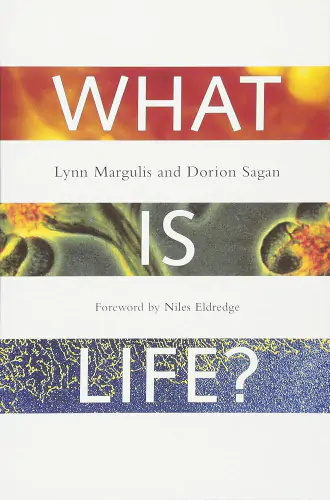
Margulis and Sagan portray life as a bustling alliance. Cells cooperate, microbes merge, and evolution favors partnership as much as competition. The result: a planet-wide web of living collaboration—less a battle of survival, more a long, ingenious experiment in teamwork.
Vernor Vinge
The Coming Technological Singularity
Within thirty years, we will have the technological means to create superhuman intelligence. Shortly after, the human era will be ended. Is such progress avoidable? If not to be avoided, can events be guided so that we may survive? These questions are investigated. Some possible answers (and some further dangers) are presented.