The Library of Consciousness

The Library
of Consciousness
of Consciousness
A Calendar for the Goddess
Beginning with a comparison of reason and logic to intuition, Terence works his way towards exploring the idea of a purposeful goal in the universe which evolution is progressing towards, and humanity's role in this journey. Next, in a nod to the solstice which occurred at the time of the lecture, he plays with the idea of a precessional calendar and argues that it would remind us of the one constant in life, which is flux. Q&A topics include future social myths, morphogenesis, globalization, and psychedelic encounters with the dead.
A Cyborg Manifesto
Haraway’s A Cyborg Manifesto is a key postmodern text, widely taught in many disciplines as one of the first to embrace technology from a leftist and feminist perspective using the metaphor of the cyborg to champion socialist, postmodern, and anti-identitarian politics. She criticized traditional notions of feminism, particularly its emphasis on identity rather than affinity, and explored the potential of the cyborg concept in order to construct a postmodern feminism that moves beyond dualisms and the limitations of traditional gender, feminism, and politics. Until Haraway’s work, few feminists had turned to theorizing science and technology and thus her work quite literally changed the terms of the debate. This article continues to be seen as hugely influential in the field of feminism, particularly postmodern, materialist, and scientific strands. It is also a precursor to cyberfeminism and posthumanism and perhaps anticipates the development of digital humanities.
A Dialogue on Metasystem Transition
Valentin Turchin explores the theory of metasystem transitions through a conversational approach, examining how new layers of control emerge when individual systems combine into a larger, integrated system. These transitions, Turchin argues, are the key moments in evolution—like stepping stones in both biological and cultural development. By viewing evolution as a series of these transformative quanta, he reflects on past evolutionary leaps and speculates on what they could reveal about the future path of universal evolution.
A Mental Threshold Across Our Path
Teilhard unveils a universe not static but alive—cosmogenesis, a great unfolding where matter rises toward spirit, complexity begets consciousness, and humanity discovers itself as evolution aware of itself. In this vision, evil is byproduct, individuality deepens in unity, and God becomes the animating center: love driving the cosmos toward its destined convergence.
A Weekend with Terence McKenna
“Healing the inner elf through trance, dance, and diet”—the session for true McKenna enthusiasts: twelve hours with the bard himself, in which he touches upon practically all of his trademark topics.
Buddhism, The Only Real Science
Brahm argues that modern science has become dogmatic, unlike Buddhism’s humble search for truth. He humorously derides scientists’ arrogance while praising Buddhism’s rigorous objectivity and avoidance of biases. Quantum theory reveals reality as uncertain, not fixed measurements. Ultimately, the mind transcends material reality—the world fits inside it, not vice versa. Buddhism keeps science’s empiricism while avoiding its blinkered materialism, making it the true “science of mind.”
Centrology
Teilhard proposes a guiding hidden rule present in the universe, leading everything from simplicity to complexity and consciousness. He suggests that as cosmic particles evolve, they become more complex and conscious, ultimately converging toward a unifying Omega point. This vision offers a fresh perspective on the universe, blending science and philosophy to reveal a grand, interconnected cosmic journey.
Conceptions of a Global Brain
Imagine a giant, intelligent brain made of humanity and its computers—the Global Brain. This idea blends views of society as a living organism, a universal encyclopedia, and an emerging higher consciousness. Global networks like the Internet not only share information but also learn and adapt together. By combining insights from evolution and cybernetics, we can overcome conflicts and build a collective intelligence that makes solving world problems more efficient and creative.
Consciousness, Biology, Universal Mind, Emergence, Cancer Research
Biology’s deepest truths don’t live at the molecular bottom. Michael Levin argues that intelligence, goals, and selves emerge across scales: cells learn, tissues navigate, and cancer shrinks a collective mind’s horizon. Life is intelligence embodied—defined by the size of what it can care about, remember, and become.
Conversations with Paolo Soleri
Paolo Soleri's architectural-philosophical thinking sets forth fundamental reformulations to address the globalizing world's most urgent environmental, urban infrastructural, and socio-ethical problems. In this book, Soleri's most recent ideas are distilled into an accessible overview for the general reader. Soleri proposes to transform our societal systems while raising sights to a radically long-term and humanistic perspective. Among the interrelated concepts outlined here are Soleri's highly original ideas of orchid and forest, the city as hyper-organism, the urban effect, and the love project. These inspiring ideas are acutely timely in light of current environmental trends: responding to global climate change, radically reducing oil dependence, embracing frugality and reduced consumption, while simultaneously confronting issues of suburban sprawl, urban renewal, smart land use, and wise food production.
The Backbone of Night
Carl Sagan teaches students in a classroom in his childhood home in Brooklyn, New York, which leads into a history of the different mythologies about stars and the gradual revelation of their true nature. In ancient Greece, some philosophers (Aristarchus of Samos, Thales of Miletus, Anaximander, Theodorus of Samos, Empedocles, Democritus) freely pursue scientific knowledge, while others (Plato, Aristotle, and the Pythagoreans) advocate slavery and epistemic secrecy.
Who Speaks for Earth?
Sagan reflects on the future of humanity and the question of "who speaks for Earth?" when meeting extraterrestrials. He discusses the very different meetings of the Tlingit people and explorer Jean-Francois de La Perouse with the destruction of the Aztecs by Spanish conquistadors, the looming threat of nuclear warfare, and the threats shown by destruction of the Library of Alexandria and the murder of Hypatia. The episode ends with an overview of the beginning of the universe, the evolution of life, and the accomplishments of humanity and makes a plea to mankind to cherish life and continue its journey in the cosmos. The Cosmos Update notes the preliminary reconnaissance of planets with spacecraft, the fall of the Berlin Wall and the end of apartheid in South Africa, and measures towards the reduction of nuclear weapons.
Critical Path
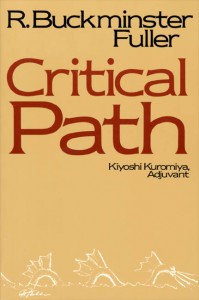
Critical Path is Fuller’s master work—the summing up of a lifetime’s thought and concern—as urgent and relevant as it was upon its first publication in 1981. The book details how humanity found itself in its current situation—at the limits of the planet’s natural resources and facing political, economic, environmental, and ethical crises. The crowning achievement of an extraordinary career, Critical Path offers the reader the excitement of understanding the essential dilemmas of our time and how responsible citizens can rise to meet this ultimate challenge to our future.

Does It Matter?
Alan Watts explores modern day problems from the outlook of his own philosophy in this collection of essays, inspired mainly by Mahayana Buddhism, Hinduism, and Taoism. Tackling problems of economics, technology, cooking, and clothing, he offers a fresh perspective which is all too foreign to Western society and implores us to get back in touch with the sensuous materiality of the world.
Elements of a Philosophy of Technology
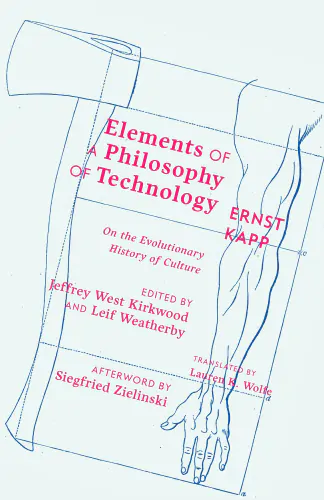
A visionary study of the human body and its relationship with the world that surrounds it. At the book’s core is the concept of “organ projection”: the notion that humans use technology in an effort to project their organs to the outside, to be understood as “the soul apparently stepping out of the body in the form of a sending-out of mental qualities” into the world of artifacts. Kapp applies this theory of organ projection to various areas of the material world—the axe externalizes the arm, the lens the eye, the telegraphic system the neural network. From the first tools to acoustic instruments, from architecture to the steam engine and the mechanic routes of the railway, Kapp’s analysis shifts from “simple” tools to more complex network technologies to examine the projection of relations. What emerges from Kapp’s prophetic work is nothing less than the early elements of a cybernetic paradigm.
From Mechanistic to Systemic Thinking
Ackoff states that humanity is in the early stage of a transition from the Machine Age to the Systems Age. The Machine Age was characterized by belief in complete understandability of the universe, analysis as a method of inquiry, and cause and effect as a sufficient relationship to explain all. The dilemma that disrupted such beliefs was systems thinking. The Machine Age began to die when humanity gave up the principle of understandability. Gradually, it’s become accepted that there can be no complete understanding of the universe because nothing can be understood independently of its environment—all is environmentally relative. While analysis produces knowledge, it is synthesis that produces understanding. Furthermore, the Systems Age recognizes that cause and effect is just one way of looking at reality among an infinite number.
How It Is
Viola Cordova was the first Native American woman to receive a PhD in philosophy. Even as she became an expert on canonical works of traditional Western philosophy, she devoted herself to defining a Native American philosophy. Although she passed away before she could complete her life’s work, some of her colleagues have organized her pioneering contributions into this provocative book. In three parts, Cordova sets out a complete Native American philosophy. First she explains her own understanding of the nature of reality itself—the origins of the world, the relation of matter and spirit, the nature of time, and the roles of culture and language in understanding all of these. She then turns to our role as residents of the Earth, arguing that we become human as we deepen our relation to our people and to our places, and as we understand the responsibilities that grow from those relationships. In the final section, she calls for a new reverence in a world where there is no distinction between the sacred and the mundane. Cordova clearly contrasts Native American beliefs with the traditions of the Enlightenment and Christianized Europeans (what she calls “Euroman” philosophy). By doing so, she leads her readers into a deeper understanding of both traditions and encourages us to question any view that claims a singular truth. From these essays—which are lucid, insightful, frequently funny, and occasionally angry—we receive a powerful new vision of how we can live with respect, reciprocity, and joy.
I've Been to the Mountaintop
Martin Luther King's last sermon, delivered at the Mason Temple the day before his assassination. He reflected on the struggle for civil rights, emphasizing the importance of unity, nonviolent resistance, and economic withdrawal to achieve justice. Dr. King expressed his determination to continue the fight, even in the face of personal danger, and his belief that the promised land of equality was within reach.
Individual and the World
This seminar covers a variety of topics, from the illusion of our separation from the environment and the futility of trying to be genuine, all the way to the discipline required to handle mystical experiences in order to bring something back from them to share with the rest of the world. The presentation ends with his endorsement of insanity, saying a healthy amount of craziness in old age is necessary to prepare for a joyous death.
Interview on Cybernetics
Heinz von Förster delves into the enigmatic realm of cybernetics. The conversation dances around the essence of this field, exploring its core principles of circularity, self-organization, and the nature of information. Together with Sherwin Gooch, he grapples with profound questions surrounding the definition of life, the Gaia hypothesis, and the tantalizing possibility of replicating human consciousness. Ultimately, the dialogue underscores the intricate interplay between observer and observed, challenging conventional notions of information and reality.
Life, Intelligence, Consciousness, AI, and the Future of Humans
What if our minds are merely vessels for a universal consciousness, and suffering is just a bug in our mental programming? Joscha Bach and Lex Fridman explore this radical idea, discussing the stages of self-awareness, the potential for telepathy, and the transformative power of AI. Bach argues that AI's evolution may lead to a unified global mind, transcending individual identities and reshaping life as we know it. Are we on the brink of a new era of consciousness, or is humanity destined to stumble into oblivion?
Lucifer and Ahriman
We live in critical, apocalyptic times. In these five lectures, given just after the end of the First World War and in the midst of trying to effect the social-political life of his times with the movement for a threefold social order, Steiner focuses on the vital task of developing a right orientation toward the spirit: a free spiritual life. With great compassion and understanding he shows how humanity must walk a conscious middle path between the two “tempting” powers of Lucifer and Ahriman. He tells of the incarnation of Lucifer in the third millennium BCE, from which flowed not only the wisdom of paganism but also the intellectual consciousness we enjoy today. Ahriman is shown to be approaching humanity through phenomena such as materialism, nationalism, and literalism in preparation for his incarnation in the millennium now opening. It must not be thought, however, that these two powers work apart: on the contrary, they work more and more together. Our task is to hold them in balance, continually permeating the one with the other. Doing this requires a new form of conscious spirituality.
Man on his Nature
Sherrington had long studied the 16th century French physician Jean Fernel, and grew so familiar with him that he considered him a friend. In the years of 1937 and 1938, Sherrington delivered the Gifford lectures at the University of Edinburgh; these focused on Fernel and his times, and came to form the principal content of Man on His Nature. The book was released in 1940, and a revised edition came out in 1951. It explores philosophical thoughts about the mind, the human existence, and God, in connection with natural theology. In his ideas on the mind and cognition, Sherrington introduced the idea that neurons work as groups in a "million-fold democracy" to produce outcomes rather than with central control.
Marshall McLuhan in Conversation with Mike McManus
Mike McManus talks to Marshall McLuhan, the internationally-known critic of the media. McLuhan discusses modern regionalism and separatism, nostalgia, violence and identity, television as an addictive tranquilizer, propaganda, and his reasons for becoming a Roman Catholic. One of Marshall McLuhan's final interviews.
Metaman
In this visionary book, Gregory Stock gives us a new way of understanding our world and our future. He develops the provocative thesis that human society has become an immense living being: a global superorganism in which we humans, knitted together by our modern technology and communication, are like the cells in an animal's body. Drawing on impressive research, Stock shows this newly formed superorganism to be more than metaphor: it is an actual living creature, which he has named Metaman, meaning beyond and transcending humans.
Metapatterns
In the interdisciplinary tradition of Buckminster Fuller’s work, Gregory Bateson’s Mind and Nature, and Fritjof Capra’s Tao of Physics, Metapatterns embraces both nature and culture, seeking out the grand-scale patterns that help explain the functioning of our universe. Metapatterns begins with the archetypal patterns of space, both form-building and relational. Tyler Volk then turns to the arrows, breaks, and cycles that infuse the workings of time. With artful dexterity, he brings together many layers of comprehension, drawing on an astounding range of material from art, architecture, philosophy, mythology, biology, geometry, and the atmospheric and oceanographic sciences. Richly illustrating his metapatterns with a series of sophisticated collages prepared for this book, Volk offers an exciting new look at science and the imagination. As playful and intuitive as it is logical and explanatory, Metapatterns offers an enlightening view of the functional, universal form in space, processes in time, and concepts in mind.
Mind and Matter
Based on the Tarner Lectures delivered at Trinity College in Cambridge, Mind and Matter is Erwin Schrödinger's investigation into a relationship which has eluded and puzzled philosophers since the earliest times.
Mind and Nature
Renowned for his contributions to anthropology, biology, and the social sciences, Bateson asserts that man must think as Nature does to live in harmony on the earth and, citing examples from the natural world, he maintains that biological evolution is a mental process.
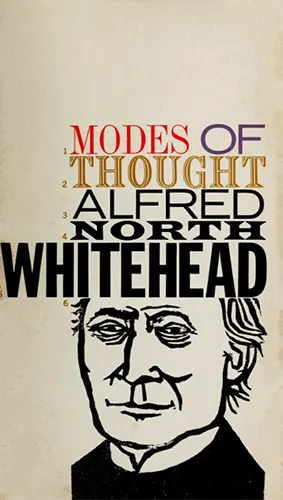
Modes of Thought
Whitehead believed that reality consisted of organic processes within processes, all interrelated and overlapping. These processes are the basis on which human experience, conscious and otherwise, becomes an ongoing center of integrated and novel freedom. In this collection of lectures he urges us to consider “Importance” as an ultimate notion underlying our impulse to create the various modes and sub-generalities of thought which guide our planning and acting.
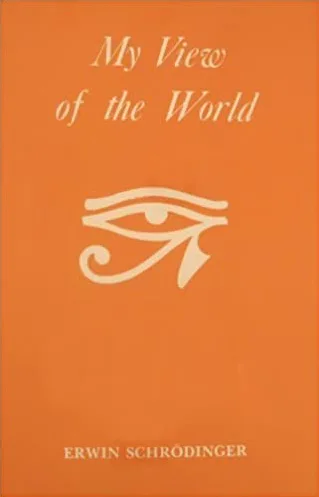
My View of the World
A Nobel prize winner, a great man and a great scientist, Erwin Schrödinger has made his mark in physics, but his eye scans a far wider horizon: here are two stimulating and discursive essays which summarize his philosophical views on the nature of the world. Schrödinger's world view, derived from the Indian writings of the Vedanta, is that there is only a single consciousness of which we are all different aspects. He admits that this view is mystical and metaphysical and incapable of logical deduction. But he also insists that this is true of the belief in an external world capable of influencing the mind and of being influenced by it. Schrödinger's world view leads naturally to a philosophy of reverence for life.
Neuralink and the Brain's Magical Future
What if your brain could seamlessly connect to a computer, enhancing your intelligence and unlocking new abilities? Tim Urban dives into Neuralink, Elon Musk’s ambitious project to merge minds with AI. Our brains, while remarkable, are slow compared to machines—Neuralink’s neural lace technology could change that. But this isn’t just about creating cyborgs; it’s about overcoming human limitations and shaping the future of intelligence itself. Are we on the verge of a true symbiosis with AI?
Of Itself So
Watts takes us on an odyssey to peer through the prism of East and West. Brace for a metamorphosis as familiar philosophical tenets are unraveled and recast in vibrant hues. From the celestial monarchies of old to the grand cosmic theater, diverse models of existence intertwine, beckoning us to shed our self-imposed blinders. An electrifying exploration of consciousness itself, this lecture tantalizes with the promise of inner awakening and long-sought liberation.
On Nature and Media
Marshall McLuhan explains the effects of accelerating communication speeds on human society.
On Second-Order Observation and Genuine Pretending
This paper discusses the meaning of the concept of ‘second-order observation’ used by Niklas Luhmann (1927–1998). Luhmann identifies second-order observation as a defining characteristic of modern world society. According to Luhmann, all social systems construct a social reality on the basis of the observation of observations. Rating agencies in the economy or the peer-review process in the academic system are examples of social mechanisms manifesting second-order observation. Social media also represent organized second-order observation. The paper suggests that in a society based on second-order observation, ‘genuine pretending’ is an adequate mode of existence. This notion is derived from the Daoist text Zhuangzi. It indicates a disassociation from social roles which allows their performers to exercise these roles with ease and, at the same time, maintain a state of sanity. (Published in Thesis Eleven 2017, Vol. 143(I) 28–43.)
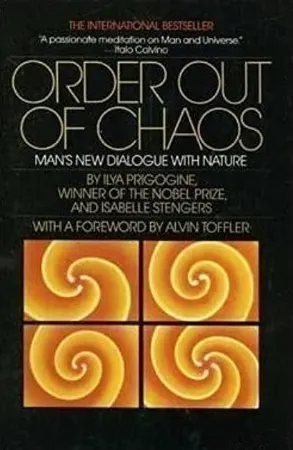
Order out of Chaos
Belgian philosopher Isabelle Stengers and Ilya Prigogine, winner of the Nobel Prize in 1977 for his work on the thermodynamics of non-equilibrium systems, make their ideas accessible to a wide audience in this book, which has engendered massive debate in Europe and America. Stengers and Prigogine show how the two great themes of classic science, order and chaos, which coexisted uneasily for centuries, are being reconciled in a new and unexpected synthesis.
Physics of Life, Time, Complexity, and Aliens
Sara Walker and Lex Fridman explore life’s grand mysteries, touching on the nature of existence and the origins of life to the potential of artificial intelligence and the future of consciousness. Walker’s unique perspective challenges conventional wisdom, inviting us to reconsider our place in the cosmic dance.
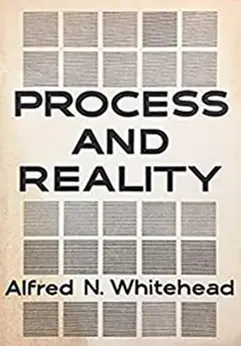
Process and Reality
One of the major philosophical texts of the twentieth century, Process and Reality is based on Alfred North Whitehead’s influential lectures that he delivered at the University of Edinburgh in the 1920s. In it, he propounds a philosophy of organism (or process philosophy), in which the various elements of reality are brought into a consistent relation to each other. It is also an exploration of some of the preeminent thinkers of the seventeenth and eighteenth centuries, such as Descartes, Newton, Locke, and Kant.
Reconciliation of Opposites
Alan Watts reveals how Eastern thought embraces the wiggly dance between opposites. Buddhist masters nudge their students with banter to blend inner and outer worlds, topple rigid beliefs, and allowing freedom to rise from the rubble of shattered assumptions. In the end, clinging dissolves into flowing and suffering transforms into living.
Relevance of Oriental Philosophy
Alan Watts discusses the limitations of Western theology, contrasting it with Eastern philosophies. He argues that the Western concept of God as a separate, authoritarian figure is problematic and that true faith involves letting go of fixed ideas about God. Watts suggests that Eastern ideas, such as the unity of opposites and the illusory nature of the ego, can provide a more meaningful understanding of spirituality and existence.
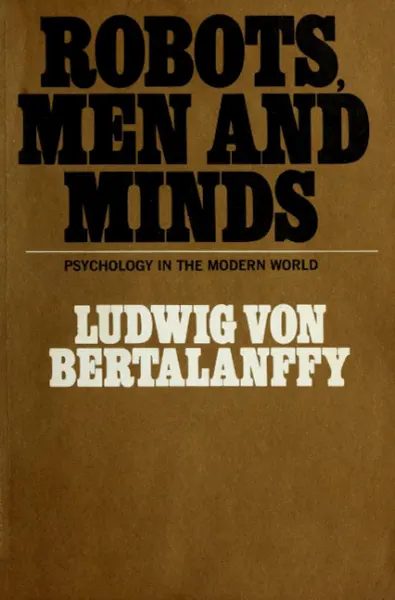
Robots, Men, and Minds
Based on lectures delivered as The Inaugural Lectures in The Heinz Werner Lecture Series at Clark University (Worcester, Mass.) in January 1966, the book introduces new conceptions of humans and their world. After discussing the advantages and drawbacks of humanity's propensity for the symbolic construction of reality, it focuses on the systems approach to an understanding of the species. The author warns against the common error of identifying cybernetics with general systems theory. No matter how complex the cybernetic system, it "can always be resolved into feedback circuits" and thought of in terms of "linear causality." The regulative behavior of general systems is determined by goal-directed, dynamic interaction between many forces and variables in an open system. Bertalanffy points out that "no comprehensive theory of systems exists today." As a model, however, the approach has many advantages, such as obviating the need for the "ghost in the machine" and suggesting some solutions to the mind-body problem.
Sacred Plants as Guides
Terence McKenna takes us on a journey through history, exploring the powerful role of psychedelic plants in human evolution and consciousness. He argues that these plants offer a gateway to hidden realms of reality, inhabited by enigmatic entities and offering profound insights. Reconnecting with these ancient allies could be the key to solving our modern problems and unlocking a brighter future for humanity.
Science and Ethics
Science and Ethics was the title of the "Conway Memorial Lecture" delivered by English biologist, scientist and mathematician John Burdon Sanderson Haldane at Essex Hall in London.
Solid Emptiness
Alan explores Mahayana Buddhism and the concept of śūnyatā (“emptiness”), emphasizing it as freedom from clinging, not nihilism. He explains how language and the illusion of a separate self cause suffering and contrasts this with the fluid, interconnected reality of life. Enlightenment, he argues, is embracing life’s impermanence without attachment, unlocking creativity, joy, and presence. Far from passive, this mindset energizes individuals, offering a remedy to Western culture’s obsession with control and anxiety.
Taoist Way
This talk explores the Taoist philosophy of living fully in the present moment without attachment to the past or future. According to Watts, following the Tao involves acting spontaneously and effortlessly without forcing, appreciating the interconnected nature of all things, and seeing through illusions of the ego and continuity of self across time. The goal is to experience each instant purely without getting caught up in intellectualizations.
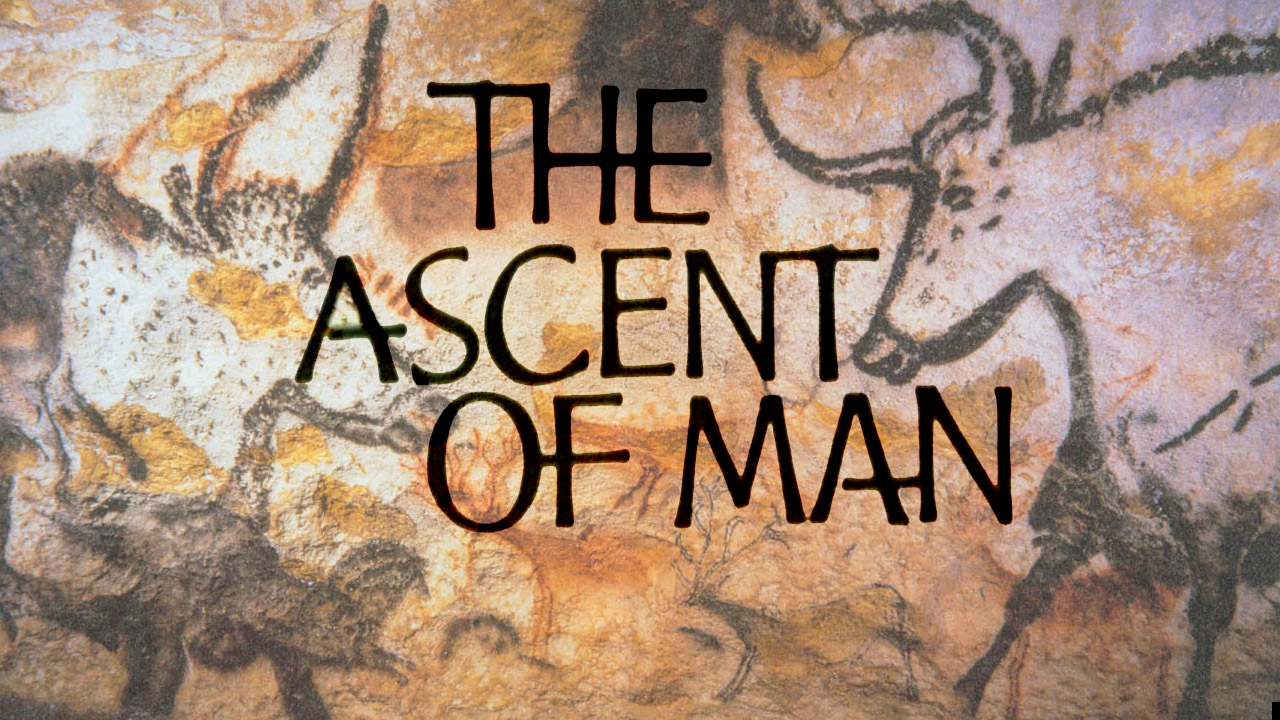
The Majestic Clockwork
Newton and Einstein, the two giants of physics, imposed great systems of order on the world. This episode illustrates the revolution that occurred when Einstein's theory of relativity turned Newton's elegant description of the universe inside out.

The Book
At the root of human conflict is our fundamental misunderstanding of who we are. The illusion that we are isolated beings, unconnected to the rest of the universe, has led us to view the “outside” world with hostility, and has fueled our misuse of technology and our violent and hostile subjugation of the natural world. In The Book, philosopher Alan Watts provides us with a much-needed answer to the problem of personal identity, distilling and adapting the ancient Hindu philosophy of Vedanta to help us understand that the self is in fact the root and ground of the universe. In this mind-opening and revelatory work, Watts has crafted a primer on what it means to be human—and a manual of initiation into the central mystery of existence.
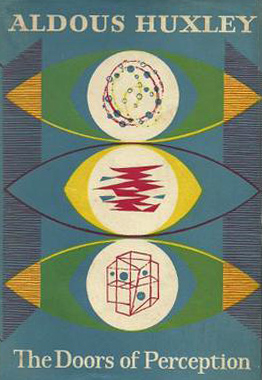
The Doors of Perception
Aldous Huxley recounts his transformative experience on a mescaline trip that took place over the course of an afternoon in May 1953. He explores how it altered his perception of reality, revealing a world rich in beauty and significance, unfiltered by the mind’s utilitarian focus. Drawing parallels to religious mysticism and artistic inspiration, Huxley critiques the limitations of normal consciousness, which he sees as a “reducing valve” that narrows reality to what is necessary for survival. The book invites readers to reconsider the nature of perception, creativity, and humanity’s spiritual potential.
The Evolution of Responsibility in the World
Teilhard argues that responsibility isn’t just a social rule but a cosmic imperative. The universe, he claims, is hurtling toward unity—collapsing matter into life, life into consciousness. Today, planetary compression—population growth, tech, and globalization—fuels interdependence. Each choice ripples across humanity: a pilot’s error, a scientist’s discovery, a leader’s word. This isn’t mere ethics; it’s evolution’s demand. As humanity merges into a thinking superorganism, responsibility becomes biological—a binding thread in Earth’s living tapestry, transcending laws to reflect our shared cosmic destiny.
The Global Superorganism
The organismic view of society is updated by incorporating concepts from cybernetics, evolutionary theory, and complex adaptive systems. Global society can be seen as an autopoietic network of self-producing components, and therefore as a living system or “superorganism”.
The God of Evolution
What if God isn’t behind us, but ahead of us? Teilhard gambles Christianity’s future on this inversion: Christ as the Omega Point, the evolutionary attractor that the universe has been straining toward since the first particles emerged from chaos—making faith not a retreat to ancient certainties, but a leap into the cosmos’s ultimate destination.
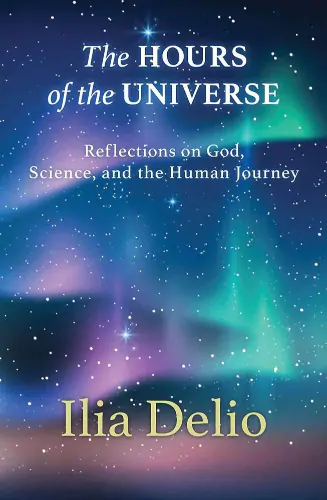
The Hours of the Universe
In a traditional monastery the recitation of the Hours calls to mind the work of God in our lives, from the gift of creation to the sufferings we bear. According to scientist, theologian, and author Ilia Delio, the universe is the new monastery. In her latest work she offers reflections for this new monastery to a broad, general audience seeking new meaning and purpose in today's world.
Integrated Education
Modern education is dangerously fragmented: rich in expertise, poor in meaning. True understanding requires “bridge-builders” who unite science, art, ethics, and lived experience, forging a shared language that reconnects facts with values, knowledge with love, and intellect with the whole of human life.
The Mind in the Universe
Krishnamurti and Bohm ponder if the mind's reactions ever end. Is there within an empty mind, silent of thought's chatter, a wellspring of creation? An eternal movement, ever-new? They muse on the flow of universal order—does this stream emerge from an absolute source, a timeless mind one with the cosmos? If so, might a human mind touch this vastness when freed of limitations? A tantalizing possibility glints.
The Mysticism of Science
Teilhard de Chardin charts how scientific inquiry evolved from occult secrets to aesthetic contemplation before the nineteenth century’s discovery of deep time ignited a revolutionary mysticism: humanity advancing toward a future it could shape. When materialism’s promise collapsed, leaving researchers spiritually adrift, Teilhard argues only Christianity can provide the animating soul science desperately needs—transforming the laboratory into a site of cosmic love.
The Natural Environment and Religion
Watts critiques our scholastic obsessions and urges an experiential approach to life, blending the spiritual and concrete like a Zen gardener planting mysteries among truths. He laments our sterile materialism and bureaucratic rigidity, championing a dance with risk, creativity, and nonverbal wisdom. With tales of mystics, scientists, and madmen, he celebrates the spice of oddballs, the necessity of nonsense, and the ineffable richness of being alive.
The Omega Point as Eschaton
Frank Tipler presents an outline of the Omega Point theory, which is a model for an omnipresent, omniscient, omnipotent, evolving, personal God who is both transcendent to spacetime and immanent in it, and who exists necessarily. The model is a falsifiable physical theory, deriving its key concepts not from any religious tradition but from modern physical cosmology and computer science; from scientific materialism rather than revelation. Four testable predictions of the model are given. The theory assumes that thinking is a purely physical process of the brain, and that personality dies with the brain. Nevertheless, he shows that the Omega Point theory suggests a future universal resurrection of the dead very similar to the one predicted in the Judeo-Christian-Islamic tradition. The notions of “grace” and the “beatific vision” appear naturally in the model.
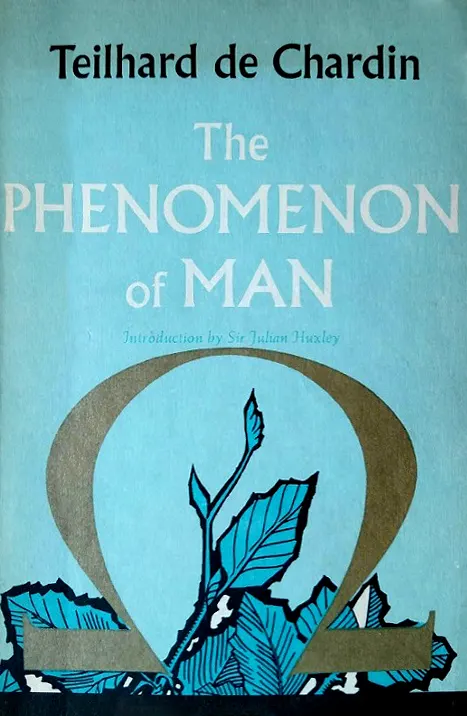
The Phenomenon of Man
Visionary theologian and evolutionary theorist Pierre Teilhard de Chardin applied his whole life, his tremendous intellect, and his great spiritual faith to building a philosophy that would reconcile religion with the scientific theory of evolution. In this timeless book (originally titled “The Human Phenomenon” in French), Teilhard argues that just as living organisms sprung from inorganic matter and evolved into ever more complex thinking beings, humans are evolving toward an “omega point”—defined by Teilhard as a convergence with the Divine.
The Sense of Man
Humanity is not a scatter of individuals, but the birth of a single mind—the noosphere. Just as life once ignited from matter, thought now ignites from life. Teilhard says our task is no longer survival alone, but conscious evolution to forge a unified destiny where the universe awakens to itself through us.
The Symbol Without Meaning
Campbell’s famous and mind-expanding essay explores the fundamental connection between myth, symbol, and human culture. In it, he looks at the origins of Western culture’s myths and symbols, and asks whether these are still relevant in the modern era.
Symbols and Meaning
Alan Watts joyfully upends assumptions about reality, using wit and wisdom to reveal how existence is a dazzling, musical mystery beyond language—not a problem to be solved but an unfolding to be experienced.
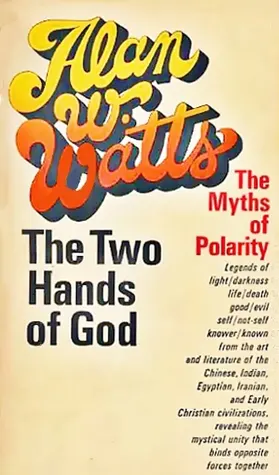
The Two Hands of God
Watts takes readers on a fascinating journey through the mythology of China, Egypt, India, the Middle East, and medieval Europe. His theme is the human experience of polarity, a condition in which opposing qualities define and complement each other. Light cannot exist without darkness, good cannot exist without evil, and male cannot exist without female. Chinese philosophy expresses this idea of universal polarity with the concepts of yin and yang, while other cultures express it through the symbolic language of myth, literature, and art. Watts illustrates the way great sages and artists across time have seen beyond the apparent duality of the universe to find a deeper unity that transcends and embraces everything.
The Ultimate Revolution
Huxley outlines what society’s ultimate revolution would look like: a scientific dictatorship where people will be conditioned to enjoy their servitude, and who will pose little opposition to the ruling oligarchy, as he puts it. He also takes a moment to compare his book Brave New World to George Orwell’s 1984, and considers the technique in the latter too outdated for actual implementation.
The Ultimate Unity for Thought is the Society of Minds
This lofty philosophical treatise passionately argues that the pinnacle of thought and being is a divine society of free spirits in fellowship, whose joyful self-realization through mutual service and growth comprises the final purpose of all creation. Our supreme hope is participation in this Community of Minds.
The Universe of Experience
Modern experience forces philosophy and social thought to confront the basic problems of value. Is this life worth caring about? How can we find a way between the deceit of fanatical belief and despair? In the view of Lancelot Law Whyte, the essential challenge to mankind today is an underlying nihilism promoting violence and frustrating sane policies on major social issues. Avoiding the seductive trap of utopianism, Whyte approaches this challenge by defining the terms of a potentially worldwide consensus of heart, mind, and will.
The Varieties of Scientific Experience
Carl Sagan's prescient exploration of the relationship between religion and science, and his personal search for God.
This View of Life
It is widely understood that Charles Darwin’s theory of evolution completely revolutionized the study of biology. Yet, according to David Sloan Wilson, the Darwinian revolution won’t be truly complete until it is applied more broadly—to everything associated with the words “human,” “culture,” and “policy.” In a series of engaging and insightful examples—from the breeding of hens to the timing of cataract surgeries to the organization of an automobile plant—Wilson shows how an evolutionary worldview provides a practical tool kit for understanding not only genetic evolution but also the fast-paced changes that are having an impact on our world and ourselves. What emerges is an incredibly empowering argument: If we can become wise managers of evolutionary processes, we can solve the problems of our age at all scales—from the efficacy of our groups to our well-being as individuals to our stewardship of the planet Earth.
Transformation of Consciousness
Alan discusses the different states of consciousness which the human mind can attain, and some of the chemical compounds which may serve as tools to reach these mental realms.
What Technology Wants
One of today's most respected thinkers turns the conversation about technology on its head by viewing technology as a natural system, an extension of biological evolution. By mapping the behavior of life, we paradoxically get a glimpse at where technology is headed—or "what it wants." Kevin Kelly offers a dozen trajectories in the coming decades for this near-living system. And as we align ourselves with technology's agenda, we can capture its colossal potential. This visionary and optimistic book explores how technology gives our lives greater meaning and is a must-read for anyone curious about the future.
What is Life?
Margulis and Sagan portray life as a bustling alliance. Cells cooperate, microbes merge, and evolution favors partnership as much as competition. The result: a planet-wide web of living collaboration—less a battle of survival, more a long, ingenious experiment in teamwork.
World as Lover, World as Self
This overview of Joanna Macy's innovative work combines deep ecology, general systems theory, and the Buddha's teachings on interdependent co-arising. A blueprint for social change, World as Lover, World as Self shows how we can reverse the destructive attitudes that threaten our world.
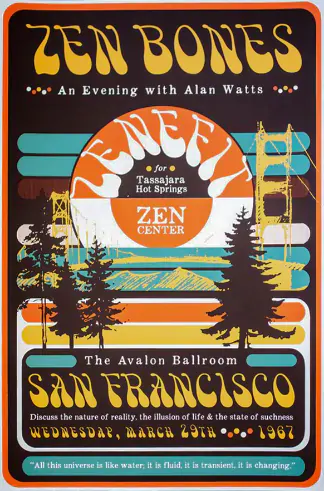
Zen Bones
Alan invites us to float like clouds and experience life directly instead of mediating it through concepts. Constant thinking takes us from the real. Open wide the mind’s doors, be here, flow present like water. Watts touches on meditation’s liberating power in realizing our true nature already within. Sit, walk, breathe; see through illusion’s mist, marvel at the mundane’s hidden jewels, embrace each now, wake up! Enlightenment’s sunrise awaits those who cease thinking. Realize you're already It and let life’s living magic move your feet.
Zen Reconsidered
Is your mind playing tricks? Alan Watts reveals Zen isn’t about adding beliefs, but shedding the illusion of a separate self. Discover you’re already part of one vast, joyful cosmic dance—experience it directly for profound freedom!